
• Home
  • Products
  • Join Now!
  • Renew
  • About Us
  • Member Login

Coach-Net

~ Travel and Adventure Blog

Coach-Net

Category Archives: RV Information

Tornado Safety Tips for RV Travelers: How to Prepare and Stay Safe

04 Wednesday Jun 2025

Posted by Coach-Net in RV Information

≈ Leave a comment

We’ve spent the past several months in Oklahoma. This has been great except for one thing; tornados and RVs don’t mix well. In fact, an RV is one of the most dangerous places a person can be when a tornado hits. So far, we’ve been fortunate enough that a tornado has never touched down where we were parked, but we have had some middle-of-the-night tornado warnings.

If you’re planning an RV trip during tornado season, you may be wondering how to prepare. Here’s what we have learned.

When and Where Do Tornadoes Strike?

First, it’s important to note that during most of the year and in most locations, tornadoes are not really all that likely. That said, in states like Texas, Oklahoma, and Kansas, the risk of a tornado touching down increases significantly during the months of April and May.

For this reason, it’s best to avoid planning RV trips through Tornado Alley during the springtime if at all possible. If this isn’t possible, read on to learn what you need to know to stay safe.

Safety Tips and Planning Ahead

Okay, so you can’t avoid spending time in a Tornado Alley state during tornado season. Here are my top tips for staying safe while camping in tornado-prone areas.

Pack a Bug-Out Bag

First, I highly recommend packing a “bug out” bag that you can grab on your way out the door if you need to seek shelter. This should include important documents, a weather radio, an external phone battery, medications you may need, snacks and bottled water, a first aid kit, a flashlight, and anything else you may need. Keep the bag by the door at all times.

Locate Shelters

While planning your trip, look for campgrounds with tornado shelters. When you arrive at a new campground, locate the shelters so you know exactly where you’re going if the sirens go off.

Learn the Difference Between a Watch and a Warning

It’s important to understand the difference between a tornado watch and a tornado warning.

  • Basically, a watch means the conditions are right for a tornado, but there is not currently a tornado in the area.
  • A warning means a tornado has been spotted in the area and you should seek shelter immediately. If the sirens go off outside or you get an emergency alert on your phone, a warning has been issued for your area.

Pay Attention to the Weather Forecast

It’s important to 1) keep an eye on the weather because it can change quickly, 2) download several weather apps and allow push notifications on each one so you are alerted of watches and warnings, and 3) allow emergency alerts from your phone.

Have an Evacuation Plan

Talk to your family about your tornado evacuation plan. Make sure everyone knows to put on shoes and grab their phones on the way out the door, and ensure each member of your party knows where the shelter is.

What to Do During a Tornado

If the tornado sirens or phone alerts go off, that means it’s time to head to the shelter. Grab your shoes, phone, and bug-out bag and go.

If you’re driving when this happens, avoid parking under an overpass, as this can actually create a wind tunnel that is incredibly dangerous. Instead, park at the nearest sturdy structure and run inside, putting as many walls as possible between yourself and the outside. If no buildings are around, pull over, get out of the vehicle, and lay flat in a ditch.

After the Storm

Once the storm passes, put on your shoes and carefully exit the shelter, watching out for debris that could be dangerous. Ensure everyone in the area is safe and call 911 if there are injuries. Check your RV for damage, take dated photos of any damage you find, and report the incident to your insurance company.

Balancing Safety with Adventure

While RVing in tornado-prone areas during the spring isn’t ideal, it is possible to do so safely. Make sure you use the steps above to prepare, stay weather-aware, and go out there and have fun!


About the author: Chelsea Gonzales

Chelsea has the amazing opportunity to take part in full-time RV living and traveling with her tiny tribe. She homeschools her five-year-old son as they travel, and takes full advantage of their unique situation by using the entire world as her son’s classroom. A group of total Disney fanatics, Chelsea and her family often find themselves in the Orlando area in order to visit the Disney parks, but they have also visited over 25 of the 50 states with plans to see many more along the way. No matter where her travels take her, Chelsea enjoys riding bikes, gazing at beautiful sunsets, finding new coffee shops, Irish dancing, and sitting around a campfire with her family.

You can join her adventures through her blog, Wonder Wherever We Wander.

Share this with your friends:

  • Click to share on Facebook (Opens in new window) Facebook
  • Click to share on X (Opens in new window) X
  • Click to share on Pinterest (Opens in new window) Pinterest
  • Click to print (Opens in new window) Print
  • Click to email a link to a friend (Opens in new window) Email
  • More
  • Click to share on Reddit (Opens in new window) Reddit
  • Click to share on Tumblr (Opens in new window) Tumblr

Like this:

Like Loading...

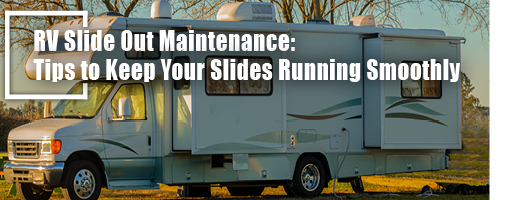
RV Slide Out Maintenance: Tips to Keep Your Slides Running Smoothly

04 Wednesday Jun 2025

Posted by Coach-Net in RV Information

≈ 2 Comments

RV slide outs are a pretty awesome thing. The way they increase living space is incredible, and they’re especially appreciated by full-timers who spend all of their time in their RVs.

That said, when we got our first RV, I actually searched specifically for one without slide outs. This is because I kept hearing horror stories of malfunctioning slides and didn’t want to deal with those issues. When we got a second RV and it had a slide out, we were very careful to take good care of it and ended up falling in love.

As of this writing, my position is that I’ll never again buy an RV without a slide out, but I’ll also never neglect RV slide out maintenance. Here’s what you need to know to keep your slides in tip-top shape.

Lubrication and Cleaning

The first thing you need to know about RV slide outs? The moving parts really need to be kept clean and free of debris. They should also be lubricated regularly in order to keep running smoothly. Fortunately, it’s easy enough to head under the slide with a washcloth, wipe everything down, and add some silicone lubricant. I recommend doing this about once a month.

Caring for Slide Out Seals

The seals of your slide outs also need some care and attention. These are the things that keep water from entering the slide, meaning they protect your rig from water damage—something that is not easy to fix.

Make sure to check your slide out seals regularly, looking out for cracks, missing pieces, melted bits, etc. If you see damage, replace the seals right away. I was able to do this all on my own, so it’s definitely a DIY project.

You can protect your rubber slide out seals using a slide out seal conditioning product. This will help prevent the aforementioned cracking and breaking, meaning the seals will last longer.

Slide Out Operation Best Practices

Check First

Always, always check outside before extending a slide out. We’ve never had a slide run into anything, but we’ve seen plenty of campers run their slides into trees, poles, and other obstructions.

Likewise, you will want to check before pulling the slide in. Make sure nothing is caught under the slide, as this can damage your floor. Also make sure there is no debris on top of the slide, which can cause problems as the slide comes in. Slide out toppers can help with this.

Avoid Heavy Loads and Uneven Ground

One of the biggest issues we ever had with a slide out occurred when the slide got too loaded down. The excessive weight caused the slide to lean and get stuck. We were still able to help the slide along by pushing on it, but it never ran the same again. This is why you should never put too much weight in a slide out, especially when moving it in or out.

Another thing that can cause a similar issue? Extending or retracting the slide on an uneven surface. This can cause the slide out to move unevenly, leading to issues with jamming.

Store Properly

Slide outs should always be pulled in before the RV is put into storage. This helps avoid wind damage, hail damage, and leaks that could occur with the slides out. That said, you will want to return to the RV periodically to extend and retract the slides and add lubricant to the moving parts. This will ensure the slides are in good working condition when it comes time to go camping again.

RV slide outs really are a fantastic thing. Make sure you take care of yours and they will continue to offer you plenty of space to spread out while camping for years to come!


About the author: Chelsea Gonzales

Chelsea has the amazing opportunity to take part in full-time RV living and traveling with her tiny tribe. She homeschools her five-year-old son as they travel, and takes full advantage of their unique situation by using the entire world as her son’s classroom. A group of total Disney fanatics, Chelsea and her family often find themselves in the Orlando area in order to visit the Disney parks, but they have also visited over 25 of the 50 states with plans to see many more along the way. No matter where her travels take her, Chelsea enjoys riding bikes, gazing at beautiful sunsets, finding new coffee shops, Irish dancing, and sitting around a campfire with her family.

You can join her adventures through her blog, Wonder Wherever We Wander.
Share this with your friends:

  • Click to share on Facebook (Opens in new window) Facebook
  • Click to share on X (Opens in new window) X
  • Click to share on Pinterest (Opens in new window) Pinterest
  • Click to print (Opens in new window) Print
  • Click to email a link to a friend (Opens in new window) Email
  • More
  • Click to share on Reddit (Opens in new window) Reddit
  • Click to share on Tumblr (Opens in new window) Tumblr

Like this:

Like Loading...

Your Guide To RV Water Heater Replacement

07 Wednesday May 2025

Posted by Coach-Net in RV Information

≈ Leave a comment

Recently, we noticed our RV water heater was leaking. This was, of course, incredibly unfortunate. I was super nervous to try to replace it, but we did figure it out with some help from friends. Here’s what we learned along the way…

Diagnose the Problem

My first (and possibly most important) tip is to properly diagnose the problem before fully diving in. We realized after we had already ordered a new water heater and pulled the old one out that our leak was likely just a fitting that could easily be replaced.

Even with that being the case, we were only with those friends for a short period of time and I didn’t want to risk the old water heater leaking again and being stuck without help, so we did go ahead and install the new one and made sure all the fittings were high quality and fastened tightly.

That said, I highly recommend finding the actual problem before ordering anything. It might just save you hundreds.

Choose the Right RV Water Heater Type

When I started shopping for a new water heater, I realized I had lots of options in terms of replacements. Looking through these and learning about each took time. Here’s what I found out.

Propane Tank Water Heater

This is what we had originally and what we decided to stick with. We like that the propane tank heater is good for boondocking and allows us to both carry a bit more water and avoid wasting water while waiting for hot H2O to come through the lines. That said, these traditional tank heaters are a bit more expensive than other options and are also heavier.

Propane and Electric Tank Water Heater

We also had the option of buying a tank water heater that had an electric heating element in addition to propane heating. This would be nice to have, but ultimately we decided it wasn’t worth the extra cost and installation hassle (i.e. wiring up a new control panel that includes an electric heater switch).

RV Tankless Water Heater

Tankless RV water heaters are all the rage right now. They are pretty cool because they heat water on demand, meaning you never run out of hot water. They are also relatively lightweight.

They heat water using propane, which would lead you to believe that they are good for boondocking. Unfortunately, as of now, that isn’t the case. They take several seconds to heat up water once kicked on, meaning you have to run water down the drain as you wait for it to get warm at the tap.

We also hear that some campgrounds do not provide sufficient water pressure for the heater to even kick, meaning some RVers are using their pumps all the time in order to have hot water.

Under-the-Sink Mini Electric Water Heater

I really wanted this option to work because these under-the-sink water heaters are so much cheaper than their RV-specific counterparts. They are also plug-and-play, meaning I could have installed one by myself without ever even removing the old water heater.

Unfortunately, these little water heaters use electricity to heat water, and they use a lot of it. This means you can’t run much else on the electric system when using your water heater in your RV. It also means it won’t really work for boondocking.

After debating all these options, I ended up ordering a direct replacement for my propane tank heater. However, I can definitely see how a different option might work better for you, depending on your situation and needs.

Check the Fit

Make sure the heater you buy will fit in the space you have. We chose a direct replacement so we wouldn’t have issues with this. That said, we did have to hunt around a little because our original water heater was an Atwood model, and Atwood no longer makes water heaters.

We found out that Suburban now makes a direct replacement, and it did seem to be almost identical to the old one.

Removing the Old Water Heater

Removing the old water heater was straightforward enough. Here’s what we had to do:

  1. Disconnect and turn off all water and power sources, including the shore power, batteries, city water, and water pump.
  2. Bypass the water heater and empty the water heater by pulling the plug on the front.
  3. Disconnect the water lines to and from the heater and snip the electrical wires to the heater.
  4. Remove the door on the front of the heater and remove the screws on the front of the water heater.
  5. Pry the door frame from the sealant holding it in place and pull the heater out.

Make sure you have a towel on hand, as there is likely to be water in the lines. You’ll also want to make time for (gently!) scraping old sealant away from the side of the trailer. It does need to be removed so the new water heater can go in properly.

Installing the New Water Heater

Because we purchased a direct replacement water heater, installation was pretty easy:

  1. Apply butyl tape to the wall around the outside of the water heater opening, then push the heater into place.
  2. Connect the water lines going to and from the tank and connect the wires using wire nuts.
  3. Screw the frame into place.
  4. Apply silicone sealant around the frame.
  5. Replace the door.

Double up on butyl tape in gaps if the walls of your RV are not smooth. It’s also important that you connect all wires correctly, so make sure you know what you’re doing. Once the water heater is installed, make sure to fill it and watch for leaks.

If leaks do appear, it may be that you’ll need to reroute the nearby water lines a bit to relieve tension. We found that the fittings on the new heater were ever so slightly shifted from the old ones, and our lines were too rigid to handle the change without some modification.

Once you’re sure the heater is water-tight, turn it on and wait to see if the water heats properly. If it’s on propane, ensure that the flame is a nice, healthy blue.

Congratulations! You just replaced your RV’s water heater like a pro.


About the author: Chelsea Gonzales

Chelsea has the amazing opportunity to take part in full-time RV living and traveling with her tiny tribe. She homeschools her five-year-old son as they travel, and takes full advantage of their unique situation by using the entire world as her son’s classroom. A group of total Disney fanatics, Chelsea and her family often find themselves in the Orlando area in order to visit the Disney parks, but they have also visited over 25 of the 50 states with plans to see many more along the way. No matter where her travels take her, Chelsea enjoys riding bikes, gazing at beautiful sunsets, finding new coffee shops, Irish dancing, and sitting around a campfire with her family.

You can join her adventures through her blog, Wonder Wherever We Wander.

Share this with your friends:

  • Click to share on Facebook (Opens in new window) Facebook
  • Click to share on X (Opens in new window) X
  • Click to share on Pinterest (Opens in new window) Pinterest
  • Click to print (Opens in new window) Print
  • Click to email a link to a friend (Opens in new window) Email
  • More
  • Click to share on Reddit (Opens in new window) Reddit
  • Click to share on Tumblr (Opens in new window) Tumblr

Like this:

Like Loading...

Attaining Work/Life Balance On The Road

07 Wednesday May 2025

Posted by Coach-Net in RV Information

≈ 3 Comments

One of the most difficult things to do as a full-time RVer? Balancing work with travel and fun. After all, there’s only so much time in a day, and sometimes it can be difficult to make sure you’re getting out and exploring what you came to see while also staying on top of work, chores, and other day-to-day tasks.

The good news? It is possible to do this. Here are some excellent tricks I’ve learned over the years that really help me balance work and my RV lifestyle.

Stay in Each Place Longer

The first and most important tip in this article is to simply stay longer in each place you visit. Yes, it can be tempting to hop quickly from one place to another when your home literally has wheels, but this means you have to try to squeeze all the sightseeing in each location into a small amount of time, leaving no time for work or day-to-day life.

Instead, we like to stay at least two or three weeks in one spot, giving ourselves time to do all of the usual stuff in between sightseeing sessions.

If we absolutely can’t stay in a certain spot for this long, we will plan a long stint in a less exciting place on either end of the short stint. This allows us to get work and chores done in the boring location before heading to the short stay, so we can spend all of our time seeing the attractions during the shorter stay. Heading to a less-exciting location afterwards gives us the catch-up time we may need.

Get Up Early

Getting up early to get work done before the kids wake up is an excellent way to ensure your work gets done while still giving yourself time to go exploring. I’ve met lots of families who use this method, and many of them are finished with work by noon, meaning they have the entire afternoon to explore.

Unfortunately, my husband and I are NOT morning people, so this method doesn’t work for us. What has worked better for us is staying up late instead. I’ll stay up after the kids have gone to bed and accomplish as much as I can without distractions from them. This gives us the morning and early afternoon to explore the next day.

Plan Work-Heavy Days

Work-heavy days are the method that is working well for us right now. This involves doing all of my work in 3–4 days each week, so we have the rest of the week as fun days, during which we can just play and enjoy our free time.

This does require me to be really focused during my work days, but it is doable, especially because my husband is able to focus on things like schoolwork with the kids and household chores while I work, so everything is caught up by the time our fun days roll around.

Work Efficiently

Obviously, the less time you spend working, the more time you’ll have to get out and explore. This is why finding ways to make your work as efficient as possible is a must. For me, this often involves heading to a coffee shop to work, as I am much better able to focus when I’m out of my own home and away from my kids. That said, some people find that setting up an RV office or heading out to a Clam tent to work does the same thing for them.

Other ideas for making your work as efficient as possible include:

  • Keeping a detailed planner so you know exactly what needs to be done on a given day.
  • Invest in a good internet connection. This might mean splurging on Starlink or buying multiple hotspots and a cell booster.
  • Automating or delegating mindless, repetitive tasks.
  • Using the Pomodoro Technique (25 minutes on, 5-minute break) to maintain focus.
  • Batching similar work together.
  • Avoiding time-consuming meetings that could be handled via email.

Set Boundaries

No matter when you decide to work, make those your work hours and make it clear that you will not be working outside of those hours. Don’t answer emails or do any small tasks while on outings. Instead, make your family time completely work-free. This will ensure you are spending quality time exploring with your family, and it may even help make your work time more focused.

Create a Family Calendar

Last but not least, I have to recommend creating a family calendar. Write work hours, school time, chores, outings, and classes on a calendar and keep that calendar in a place where everyone will see it regularly. This will help keep the whole family on the same page.

Balancing RV life with on-the-road work can be difficult. Even after a decade of doing it, I still find myself having trouble with it from time to time. Fortunately, the tricks above always help me get back on track quickly and I imagine they’ll help you too.


About the author: Chelsea Gonzales

Chelsea has the amazing opportunity to take part in full-time RV living and traveling with her tiny tribe. She homeschools her five-year-old son as they travel, and takes full advantage of their unique situation by using the entire world as her son’s classroom. A group of total Disney fanatics, Chelsea and her family often find themselves in the Orlando area in order to visit the Disney parks, but they have also visited over 25 of the 50 states with plans to see many more along the way. No matter where her travels take her, Chelsea enjoys riding bikes, gazing at beautiful sunsets, finding new coffee shops, Irish dancing, and sitting around a campfire with her family.

You can join her adventures through her blog, Wonder Wherever We Wander.

Share this with your friends:

  • Click to share on Facebook (Opens in new window) Facebook
  • Click to share on X (Opens in new window) X
  • Click to share on Pinterest (Opens in new window) Pinterest
  • Click to print (Opens in new window) Print
  • Click to email a link to a friend (Opens in new window) Email
  • More
  • Click to share on Reddit (Opens in new window) Reddit
  • Click to share on Tumblr (Opens in new window) Tumblr

Like this:

Like Loading...

RV Tire Wear 101: What Are Your Tires Trying to Tell You?

09 Wednesday Apr 2025

Posted by Coach-Net in RV Information

≈ Leave a comment

It is important to periodically check your RV’s tire tread looking for unusual wear patterns. Your tires are one of the most critical safety components in your RV, and their condition can directly impact your handling, fuel efficiency, and overall safety on the road. Unlike passenger cars, RVs often carry heavy loads for extended periods, which puts extra stress on the tires. Ignoring subtle signs of wear could lead to blowouts, alignment issues, or even costly repairs down the line. By regularly inspecting your tire tread and being aware of common wear patterns, you can prevent problems before they occur and keep your RV in top-roadworthy condition. Below is an image I created to help identify types of wear patterns to watch for:

Tire Wear Patterns

Center Wear

This is typically caused by overinflation which creates a rounded tread pattern and excessive heat on the center which wears the tread faster. It is important to check the pressure of your tires every time you hit the road. This should be done at the beginning of the trip when the tires are considered cold or at ambient temperature. To fix this, check the inflation of your tire and reduce the pressure to the recommended PSI which should be listed on the data label of the trailer.

Outside Wear

This is typically caused by an underinflation tire which flattens the tread and creates a reverse curve causing the outside of the tread to wear faster. Check your tire pressure before every trip and adjust according to the recommended PSI. This condition can also be caused by overloading the RV. It is important to weigh your rig on a CAT Scale to ensure that you are not over the Gross Vehicle Weight Rating (GVWR).

Inner Wear

If the inside tread is wearing faster than the rest of your tire it is typically due to an overloaded situation that puts excess weight on the axle and creates a loss of camber or simply put, a bent axle or spindle. It is important to check the weight of your RV to ensure it is not over GVWR and reduce weight if needed. The only fix for this situation is typically an axle replacement.

Outer Wear

This wear pattern is caused by excess camber which could be a bent spindle, damaged axle, or improper axle installation. This typically requires a laser alignment inspection and spindle replacement.

Periodic Inspection

It is a good idea to periodically inspect the tread of all your tires looking for excessive wear, bulges, cracks, or other imperfections that could cause premature tire wear and even a blowout. Rub your hand across the face of the tread back and forth. If you feel a rough or “feathered” tread in one direction and smooth in the other, this is an early sign of misalignment. Getting it checked by a quality service center will prevent tire issues in the future.

Cupping and Flat Spots

A flat spot on the tire tread is typically caused by over-aggressive braking and usually means the auxiliary trailer brake is set too high for the weight of the trailer. The trailer brake is designed to simply slow the momentum of the weight of the trailer, not stop it or the tow vehicle in case of brake failure. One of my drivers always had the trailer brakes set to maximum as he liked the feel of the pull when braking. His tires always came back from a trip almost square! Have your auxiliary braking system set according to the trailer weight.

Cupping can be caused by unbalanced tires, improper seated bearings, or improper weight distribution. If the tongue weight is too high or too low, you will experience highway hopping or porpoising which can be corrected by having the tongue weight checked and corrected. Some tire centers do not balance trailer tires as they do not feel it is necessary, however, I have always felt it was important to verify not only the tire but the rim is running down the road in good condition.

When Is It Time To Replace A Tire?

There are several conditions that would require a tire to be replaced starting with age. There is quite a debate regarding how long a tire should be kept in service and typically one will blow out long before it gets too old. All tires have a date stamped on the side of the tire. It starts with DOT and the last four digits are the week and year of the tire. In this case, the tire was manufactured in the third week of 2016.

For many years, tire manufacturers have recommended replacing a tire after it is 7 years old, then switching to 10 years due to newer technology. However, today most tire manufacturers do not have an age recommendation but rather a suggestion to inspect the tire and replace it if there are imperfections or excessive tire wear. Most tire experts recommend replacement after 7 years.

Another issue is tread wear as indicated earlier. Excessive and uneven tread wear should be addressed and tires should be replaced accordingly. The Department Of Transportation (DOT) has a minimum tread depth of 4/32” on steer tires and 2/32” on all others. Check your tire depth with a quality depth gauge as part of your pre-departure checklist.


About the author: Dave Solberg: Managing Editor, RV Repair Club

For the last 25 years, Dave has conducted RV maintenance and safety seminars, developed dealer and owner training programs, written RV safety and handyman articles, authored an RV handbook reference guide and logged over 100,000 miles on the road in an RV.

RV Repair Club

RV Repair Club is your go-to online resource for enthusiasts who want quality RV maintenance, repair, and upgrade information – a community where passionate RVers can come together to gather knowledge and share their experiences.

Learn more about RV Repair Club.

Share this with your friends:

  • Click to share on Facebook (Opens in new window) Facebook
  • Click to share on X (Opens in new window) X
  • Click to share on Pinterest (Opens in new window) Pinterest
  • Click to print (Opens in new window) Print
  • Click to email a link to a friend (Opens in new window) Email
  • More
  • Click to share on Reddit (Opens in new window) Reddit
  • Click to share on Tumblr (Opens in new window) Tumblr

Like this:

Like Loading...

Essential Fall Camping Tips for a Cozy Outdoor Adventure

17 Thursday Oct 2024

Posted by Coach-Net in RV Information

≈ Leave a comment

Fall is just around the corner, and that means it’s time to start planning for the fall camping season. Honestly, fall might just be my favorite part of the camping season. The crisp, cool weather, colorful leaves, and warm, hearty foods that come along with fall are somehow simultaneously comforting and invigorating.

Looking to get the most out of fall camping this year? Here are my top tips for doing just that!

Where to Go

Not sure where to go camping in the fall? I’ve been all over the country and these are the best spots for falltime fun.

Go Leaf Peeping

My first recommendation? Head somewhere with amazing fall foliage. The colors that brighten the world during the autumn season are absolutely magical, and in certain areas of the country, they are especially stunning.

I recommend one of the following locations:

  • North Carolina
  • Vermont
  • Virginia
  • Maine
  • Arkansas
  • Michigan
  • Pennsylvania
  • Oregon
  • Vermont

Visit a Farm

Farms are also amazing places to be during the fall months. September and October are when the fall harvest occurs in many areas of the country. It’s also when fall festivals happen at many farms, meaning corn mazes, hay rides, pumpkin picking, and lots of other options for family fun.

Consider investing in a Harvest Hosts membership to find a farm that will allow you to camp.

Or Head South

Not a fan of the chilly fall weather? You could also choose to head south to escape the cold. This would of course mean missing out on the pretty leaves, chilly nights around the campfire, and brisk hikes, but you’d get to enjoy a little more sunshine before winter sets in.

I recommend the following spots for fall-time sun chasing:

  • Arizona
  • Texas
  • New Mexico
  • Georgia
  • South Carolina
  • Florida

What to Do

Not sure what to do while out enjoying fall camping? Obviously, swimming is out in most parts of the U.S., but don’t worry, there are tons of other amazing options for getting out and enjoying the weather.

Hike

Hiking is my favorite outdoor activity during the autumn months. It’s the perfect way to fully immerse yourself in the colors of fall while also enjoying the pretty weather and exploring the great outdoors.

Bike

Cycling is another great option. Like hiking, riding a bike allows you to get out in the middle of all the beauty fall has to offer. Many also find it exhilarating to ride in the brisk autumn weather.

Stargaze

With fall comes some chilly nights that are just perfect for bundling up and doing some stargazing. Head somewhere with clear night skies, break out the blankets, and spend some time snuggling and looking for planets and constellations.

Have Campfires

Lastly, I highly recommend having as many campfires as possible during the fall. Obviously, campfires are fun any time of year, but they are especially wonderful during the fall when the nighttime weather is cold and everyone is looking for ways to keep warm.

Keeping Warm While Fall Camping

Speaking of keeping warm, you will want to make sure you have ways to do just that while out camping in autumn. Here are my tips for keeping warm while fall camping.

Invest in Space Heaters

Sure, you could use the furnace built into your RV, but I much prefer using space heaters whenever possible. Most campgrounds include electricity in their rates, meaning you won’t be spending any extra to run a space heater. On top of that, using space heaters in place of the propane furnace will allow you to save your propane for things like cooking and using the water heater.

Consider Cold Weather Accessories

There are some seriously cool cold-weather accessories out there these days. Some of my favorites are listed below:

  • Rechargeable Electric Hand Warmers
  • Battery Operated Heated Vest
  • Heated Camping Chair

Turn to Warm Meals

Warm meals can also be helpful for keeping everyone warm and cozy. The following meals can be made in a slow cooker or Instant Pot, making them ideal for small kitchens:

  • Dump and Start Instant Pot Alfredo
  • Slow Cooker Potato Soup
  • Slow Cooker Taco Soup
  • 7 Can Soup

There you have it, everything you need to know to be prepared for the fall camping season. Use these tips and have an amazing time enjoying the chilly weather before winter rolls around.


About the author: Chelsea Gonzales

Chelsea has the amazing opportunity to take part in full-time RV living and traveling with her tiny tribe. She homeschools her five-year-old son as they travel, and takes full advantage of their unique situation by using the entire world as her son’s classroom. A group of total Disney fanatics, Chelsea and her family often find themselves in the Orlando area in order to visit the Disney parks, but they have also visited over 25 of the 50 states with plans to see many more along the way. No matter where her travels take her, Chelsea enjoys riding bikes, gazing at beautiful sunsets, finding new coffee shops, Irish dancing, and sitting around a campfire with her family.

You can join her adventures through her blog, Wonder Wherever We Wander.

Millie W. ~ “Our experience was smooth, smooth, smooth. Enough said.” 

Share this with your friends:

  • Click to share on Facebook (Opens in new window) Facebook
  • Click to share on X (Opens in new window) X
  • Click to share on Pinterest (Opens in new window) Pinterest
  • Click to print (Opens in new window) Print
  • Click to email a link to a friend (Opens in new window) Email
  • More
  • Click to share on Reddit (Opens in new window) Reddit
  • Click to share on Tumblr (Opens in new window) Tumblr

Like this:

Like Loading...

10 Awesome & EASY RV Bathroom Upgrades

17 Thursday Oct 2024

Posted by Coach-Net in RV Information

≈ Leave a comment

I absolutely adore having a bathroom with us wherever we go. In fact, it might just be one of my favorite things about RV travel, especially since we have kids in tow. That said, RV bathrooms are far from perfect. For this reason, I have upgraded and changed every single RV bathroom we’ve ever had.

Below are some of my favorite RV bathroom upgrades. Each of these is simple and relatively inexpensive, but so very helpful.

Sink Backsplash

I hate that RVs rarely come with backsplashes behind the sinks. The walls get dirty and they are much harder to clean than a tile backsplash. Besides, a backsplash breaks up the monotony of the beige RV walls and can add a pop of color.

For this reason, I will absolutely always recommend installing a backsplash in your RV bathroom. Peel-and-stick tile works perfectly for this, and absolutely anybody can work with it. I love the way a backsplash can brighten the space immediately.

Oxygenics Shower Head

Another thing I hate? The shower heads that come in RVs. Why in the world do they put such cheap, useless shower heads in these things? A better shower head is a must if you plan to use your RV shower often at all.

Oxygenics shower heads are ideal for this. They actually improve water pressure without using any more water, meaning you can have a better shower experience without using your entire freshwater tank or filling your whole gray tank. Even if you’re camping with full hookups, this can be handy because it helps keep you from using all of the hot water.

Retractable Clothesline

Honestly, I never would have thought to put a clothesline in the shower, but one of our old RVs had one installed when we bought it, and we used that thing regularly. It was perfect for hanging swimsuits to dry when the weather was wet, and we even used it to dry laundry once or twice.

I hope to install a retractable clothesline in our current RV at some point because I really miss having one, and I imagine you’d find it useful as well. Fortunately, there are many options on the market and they are really easy to install.

Soap Dispensers

Shampoo, conditioner, and shower gel can all be cumbersome to deal with in an RV. They will fall off the shower shelves and spill if you forget to move them before moving the RV, and trying to keep them on the narrow shower shelves while washing can be annoying. This is where wall-mounted soap dispensers come into play.

There are many versions of these, but all of them do the same thing: dispense shampoo, conditioner, and/or shower gel into the palm of your hand with the push of a button. These are relatively easy to install and so worthwhile!

Over-Toilet Shelf

Many RV bathrooms lack storage space, meaning finding spots for things like towels and toilet paper can be a problem. An over-the-toilet shelf can be extremely helpful because it uses the otherwise unused space over your toilet as a storage area. I do recommend mounting the shelf to the wall somehow to keep it from tipping, but otherwise, the installation is as easy as it gets.

Over-the-Door Toiletry Holder

Another way to give yourself more storage space and keep things as organized as possible? An over-the-door shoe organizer. Yes, these are intended for shoes, but there is no reason you can’t use them for other things—and in my opinion, one of the best ways to use such an organizer is to hold toiletries.

Fill the pockets with ponytail holders, hair pins, hairspray, gel, soaps, shampoos, conditioners, toothpaste, and anything else you might need in the bathroom. Get a see-through holder and you’ll be able to see exactly what is in each pocket.

Command Towel Hooks

Last but not least, I had to include at least one Scotch Command product in this list. In this case, I am recommending their large towel hooks, which can hold an entire bath towel with no problem at all.

I love that the hooks can be installed by anyone without any tools at all, and that they are just as easily removed without any damage to the RV walls. Of course, it’s also nice to have plenty of places to hang damp towels.

As you can see, there are plenty of super easy ways to upgrade your RV bathroom and make it more functional. Which of these upgrades will you do first?

May contain affiliate links.


About the author: Chelsea Gonzales

Chelsea has the amazing opportunity to take part in full-time RV living and traveling with her tiny tribe. She homeschools her five-year-old son as they travel, and takes full advantage of their unique situation by using the entire world as her son’s classroom. A group of total Disney fanatics, Chelsea and her family often find themselves in the Orlando area in order to visit the Disney parks, but they have also visited over 25 of the 50 states with plans to see many more along the way. No matter where her travels take her, Chelsea enjoys riding bikes, gazing at beautiful sunsets, finding new coffee shops, Irish dancing, and sitting around a campfire with her family.

You can join her adventures through her blog, Wonder Wherever We Wander.

Swain W. ~ “Service was excellent and follow up was fantastic. It means a lot to be taken care of when you are down. Very happy with everyone’s performance I would not have known what to do or who to call if I had not had Coach-Net. You all were excellent.”

Share this with your friends:

  • Click to share on Facebook (Opens in new window) Facebook
  • Click to share on X (Opens in new window) X
  • Click to share on Pinterest (Opens in new window) Pinterest
  • Click to print (Opens in new window) Print
  • Click to email a link to a friend (Opens in new window) Email
  • More
  • Click to share on Reddit (Opens in new window) Reddit
  • Click to share on Tumblr (Opens in new window) Tumblr

Like this:

Like Loading...

How To Properly Store Your House Batteries

17 Thursday Oct 2024

Posted by Coach-Net in RV Information

≈ 1 Comment

It’s that time again, crops are coming out of the fields, leaves are turning, and cold weather is just around the corner. We may be able to get a few more weekends of camping in, however, it is time to start thinking about storing our RV for the winter.

Most RVers know what to do about winterizing the freshwater system with either antifreeze or blowing out the lines with air however, few take the time to identify the type of house battery they have and how to properly store it. Should you leave the unit plugged in to keep the battery charged, remove the battery or batteries and keep them in a garage, or just let them sit?

Types Of Deep Cycle Batteries

The batteries used to power your 12-volt components in an RV commonly referred to as “House Batteries” are deep cycle which means they are designed to be drawn down to a certain percent of power or amp hours and recharged several times. This is what a “cycle” is referring to. They are designed to provide prolonged 12-volt power over time vs a chassis or engine battery that is rated in Cold Cranking Amps (CCA) and designed to provide high power to turn an engine over for 30 seconds.

There are three types of deep cycle batteries used in RVs, Flooded Lead Acid (FLA), Absorbed Glass Mat (AGM), and the newer Lithium Iron Phosphate (LiFeP04). Each version has a different charge profile and also a different recommendation for storage.

Flooded Lead Acid (FLA)

These batteries have been used for years and are still the “standard” battery due to availability and cost. If you are not boondocking, or dry camping much and don’t need high amp-hour capacity, the FLA battery is perfect, it just needs a little more maintenance and TLC when it comes to charging and storage. FLA batteries have lead plates inside that are covered in acid and are prone to sulfation. As the power is drawn down, Sulphur coats the plates and requires a multi-stage charge which starts with a bulk stage that is a high voltage charge and breaks up the sulfation. Most RV converters/chargers do not have this, rather an initial charge of 13.6-volts and a maintenance charge of 13.2-volts. This will not break up the sulfation and the battery will lose storage capacity. It will also “gas” the acid and you will need to check the fluid level at least once a month.

FLA batteries will naturally drain power if not connected to a charger and even faster if left connected in a rig that has components that will run even with the battery disconnect switch in the off position which should mean everything is disconnected. However, the LP leak detector typically bypasses the disconnect switch and will drain a battery in less than 2 weeks. A drained battery will sulfate faster and in cold weather, a low battery can freeze and ruin the battery. FLA batteries need to have the fluid level checked more often as well.  

If you have access to 120-volt power, I would recommend not plugging in the shoreline cord, rather get a portable 120-volt battery maintainer that has desulfation such as the Battery Minder. Plug that into the storage facility outlet and connect it to the battery. You can find the Battery Minder at Northern Tool. The smaller unit will be sufficient for two house batteries.

If you do not have access to 120-volt power at the storage facility you can use a small solar panel and a charger/desulfation product like the Battery Minder, or remove the batteries and hook them up to one in a garage. Another option is to go to the storage facility and start the unit every 30 days and let it run with a desulfation product for an hour or more.

Absorbed Glass Mat (AGM)

AGM batteries also have lead plates covered with acid like the FLA models but are sealed and have a fiberglass material between the plates and are less susceptible to sulfation. However, a misconception is that AGM batteries will not sulfate however they can still be affected without the proper charge and storage.

Most AGM batteries require an initial charge of 14.4 – 15 -volts and then a float or maintenance charge of 13.5 – 13.8 – Volts. So the typical RV converter/charger will not be effective in maintaining an AGM battery and especially not during storage. However, if your rig has a programmable converter such as the Progressive Dynamics PD9000 series, it will keep them maintained properly if the unit is plugged in.

However, in my opinion it is best to use a small charger/maintainer that is designed for AGM batteries. Using a typical 2 amp trickle charger is not sufficient, rather one that can be programmed for the AGM charging profile.

Lithium Iron Phosphate (LiFeP04)

The Lithium battery has become the “hot” battery recently as it will not sulfate, has a cycle rate of anywhere from 5-10K which means it could last for 10 years or more, and can be drained to 100% of it’s power capacity known as amp hours.

The downside of Lithium besides the cost, is it needs a 14.4-volt charge which most converters/chargers do not have, and can not be charged in below-freezing temperatures without some type of heater which is usually controlled by a battery management system (BMS) within the battery. That of course is only with the good Lithium Batteries which is a select few.

I have posted several articles about swapping out your standard FLA and AGM batteries for Lithium and what is required for charging, temperature control, and even DC to DC converters so we will not go into that, however I found the best thing to do for storing Lithium Batteries is to simply disconnect the negative cable or cables depending on your configuration. According to Go Power, Expion 360, Battleborn, and others that supply the RV industry, the Lithium battery will only draw down less than 1% in 6 months if there is no draw on the battery such as an LP leak detector. If you disconnect the negative cable, there will be no draw at all.


About the author: Dave Solberg: Managing Editor, RV Repair Club

For the last 25 years, Dave has conducted RV maintenance and safety seminars, developed dealer and owner training programs, written RV safety and handyman articles authored an RV handbook reference guide, and logged over 100,000 miles on the road in an RV.

RV Repair Club

RV Repair Club is your go-to online resource for enthusiasts who want quality RV maintenance, repair, and upgrade information – a community where passionate RVers can come together to gather knowledge and share their experiences.

Learn more about RV Repair Club.


Sandra L. ~ “Both times we’ve had to call Coach-Net, they have been very friendly, compassionate, and helpful. This last time the representative even called me back to say he talked to his manager and they would help us even more by paying part of the second service call fee. Unexpected and amazing!”

Share this with your friends:

  • Click to share on Facebook (Opens in new window) Facebook
  • Click to share on X (Opens in new window) X
  • Click to share on Pinterest (Opens in new window) Pinterest
  • Click to print (Opens in new window) Print
  • Click to email a link to a friend (Opens in new window) Email
  • More
  • Click to share on Reddit (Opens in new window) Reddit
  • Click to share on Tumblr (Opens in new window) Tumblr

Like this:

Like Loading...

Setting Up Your Outdoor Living Area

04 Wednesday Sep 2024

Posted by Coach-Net in RV Information

≈ Leave a comment

When you’re camping, you tend to spend a lot of time outdoors. The interior space offered by an RV tends to be minimal at best—and besides, the whole point of parking your rig in a beautiful place is to get out and enjoy it, right?

That said, it’s a lot more fun to hang out in your campsite when you have a nice outdoor living area set up. In this article, we are going to discuss the key components of an outdoor living space so you can make your campsite the most inviting one around.

Put Down a Rug

First, we highly recommend putting down an outdoor rug. This helps pull everything together, creating a sense of being in a personal bubble even when there are no walls around you. On top of that, the rug makes it comfortable to walk outside your door barefoot and even helps keep your RV floor clean by removing debris before you walk inside.

Create a Kitchen

Cooking inside the RV will make it hot in summer and cause issues with condensation during winter. Obviously, you won’t always be able to take the cooking outside, but when you can, it is an ideal solution to this problem. Of course, you’ll need an outdoor kitchen set up in order to do this and if your RV doesn’t have one built in, you will need to put it together yourself.

For this, we recommend:

  • A grill and/or outdoor stove
  • A portable sink or dish pan
  • An ice chest or mini fridge that can be plugged in outdoors
  • A tablecloth to put on the campsite picnic table, and/or a folding table of your own

Grab Some Chairs

Obviously, you will want to be comfortable in your outdoor living area. For this reason, comfortable camp chairs are must-have items. Luckily, there are tons of great options out there. We recommend the following:

  • ALPS Mountaineering King Kong
  • YETI Trailhead
  • Kelty Low Loveseat

Put Up Screens

Sometimes the awning isn’t enough to provide sun protection while hanging out in your campsite. For this, we recommend awning screens. There are both front screens and side screens available, and if you invest in both, you can create a whole screen room!

Shelter in a Clam Tent

Alternatively, you could simply grab a Clam Tent and pop that up in your campsite. We love that Clam Shelters are super easy to set up and take down, and that they are tall enough to stand in comfortably.

These tents come in a variety of sizes, so you can get one to fit all your family and friends. And, you can choose to pull the sides down for an enclosed space or open them up to allow the breeze to flow through the mesh, meaning you can use the shelter year-round.

Invest in Lights

Hanging out in a dark campsite is no fun, and the outdoor lights on some RVs simply won’t cut it. If your RV outside light is a bit lackluster, consider picking up some lighting for your outdoor living space.

We really love to line the outside of our campsite with solar lights, but you could also choose to put a rope of LED lights on your RV awning. If you have a permanent campsite and won’t have to move often, some cute string lights could also be a fun and festive touch.

Get a Fan

Last but not least, you will want to put a fan in your outdoor living space. This serves a couple of purposes that make it an indispensable item at any campsite:

  1. The fan gets the air moving, helping to keep you cool when the weather is hot.
  2. Because the fan moves the air, it helps keep bugs off your site and away from you.

There you have it, everything you need to make your outdoor living space irresistible. We’re willing to bet you spend a lot more time hanging out outdoors once you have these items set up in your outdoor living space!

May contain affiliate links.


About the author: Chelsea Gonzales

Chelsea has the amazing opportunity to take part in full-time RV living and traveling with her tiny tribe. She homeschools her five-year-old son as they travel, and takes full advantage of their unique situation by using the entire world as her son’s classroom. A group of total Disney fanatics, Chelsea and her family often find themselves in the Orlando area in order to visit the Disney parks, but they have also visited over 25 of the 50 states with plans to see many more along the way. No matter where her travels take her, Chelsea enjoys riding bikes, gazing at beautiful sunsets, finding new coffee shops, Irish dancing, and sitting around a campfire with her family.

You can join her adventures through her blog, Wonder Wherever We Wander.

Lynn B. ~ “Coach-Net was excellent from beginning to end. I highly recommend this service!”

Share this with your friends:

  • Click to share on Facebook (Opens in new window) Facebook
  • Click to share on X (Opens in new window) X
  • Click to share on Pinterest (Opens in new window) Pinterest
  • Click to print (Opens in new window) Print
  • Click to email a link to a friend (Opens in new window) Email
  • More
  • Click to share on Reddit (Opens in new window) Reddit
  • Click to share on Tumblr (Opens in new window) Tumblr

Like this:

Like Loading...

Understanding RV Hookups

07 Wednesday Aug 2024

Posted by Coach-Net in RV Information, RV Newbie, RV Safety

≈ 1 Comment

Tags

RV Basics, RV Electrical Safety, RV hookups, RV Sewage Hookups, RVing 101, Water Hookup

RVing is fantastic because it allows you to travel in comfort, even if you happen to wander into the middle of the desert or park next to the beach. That said, in order to take full advantage of the comforts offered by your RV, you will need to have access to RV hookups.

Not sure what RV hookups are or how to use them? This is the article for you.

What are RV Hookups?

There are three types of RV hookups: water, electric, and sewer. Water hookups allow you to have running water in your rig. Meanwhile, electric RV hookups give you a place to plug your RV in so you have power running to your appliances. Lastly, the sewer hookup gives you a safe and sanitary place to dump your RV tanks via an RV sewer hose.

Where to Find RV Hookups

RV hookups are found in campgrounds and RV parks across the country. While hookups are available at many campgrounds, they aren’t always included in the list of amenities, and even those that have water and/or electricity for RVs may not have sewer hookups at each site. For this reason, you will want to call ahead to make sure that whichever campground you book has the hookups you’d like to have.

Note: Some RVs require 30 amps of electricity, and others require 50 amps. Make sure the campground in question has the right kind of electric hookup for your RV. If not, you might need a dogbone adapter.

Using RV Hookups

Wondering how you go about using RV hookups once you’re parked at a campsite? In this next section, we will go over each type of RV hookup and how to use it.

RV Water Hookups

To connect to an RV water hookup, you will need a freshwater hose and an RV water pressure regulator. Make sure you have a freshwater hose (blue or white) rather than a garden hose, as this will help ensure the water is safe to consume.

Start by connecting the water pressure regulator to the end of the freshwater hose. Screw the other side of the pressure regulator onto the campground water spigot and attach the other end of the hose to the camper at the city water inlet.

Turn the water on at the spigot and head into the RV to check the pressure at the faucets. Adjust as necessary.

RV Electric Hookups

If you want to use an RV electric hookup, you will need an RV surge protector. Make sure you buy the right one for your RV, as there are both 30-amp and 50-amp versions available.

Start by finding the correct outlet on the power pedestal. The 30-amp outlet will have spots for three prongs, and the 50-amp will have spots for four prongs. Plug the surge protector into the correct outlet on the power pedestal and flip the matching breaker into the “on” position. Check the surge protector display to ensure everything is okay with the connection.

If everything looks good, turn the breaker off, plug the RV power cord into the surge protector, and turn the breaker back on. This should give your RV power to run all appliances. That said, you’ll need to be careful not to run too much at once, as doing so will flip the breaker.

RV Sewer Hookups

Finally, you’ll want to hook up to the sewer connection point. For this, we recommend donning some disposable gloves. You’ll also need a sewer hose with all the correct connection pieces.

With your gloves on, remove the caps from the sewer hookup as well as the RV sewer outlet. Twist the threaded piece from your sewer hose kit into the sewer hookup. When that is tight, twist the connector on the end of the hose into the top of the threaded piece.

Carry the other end of the sewer hose to the RV and connect it to the sewer outlet by twisting it into place. Once all connections are secure, you can open the tanks and let the wastewater run into the sewer. We recommend opening the black tank first so that the follow-up gray water can wash the black water out of the hose.

Now that you know the basics of RV hookups, it’s time to put your knowledge to the test. Book a campground now and get ready for the adventure of a lifetime!


About the author: Chelsea Gonzales

Chelsea has the amazing opportunity to take part in full-time RV living and traveling with her tiny tribe. She homeschools her five-year-old son as they travel, and takes full advantage of their unique situation by using the entire world as her son’s classroom. A group of total Disney fanatics, Chelsea and her family often find themselves in the Orlando area in order to visit the Disney parks, but they have also visited over 25 of the 50 states with plans to see many more along the way. No matter where her travels take her, Chelsea enjoys riding bikes, gazing at beautiful sunsets, finding new coffee shops, Irish dancing, and sitting around a campfire with her family.

You can join her adventures through her blog, Wonder Wherever We Wander.

Tim C. ~ “Patrick answered quickly, made sure we were safe, and immediately started working on options to get us safely on the road again! Incredible Service!”

Share this with your friends:

  • Click to share on Facebook (Opens in new window) Facebook
  • Click to share on X (Opens in new window) X
  • Click to share on Pinterest (Opens in new window) Pinterest
  • Click to print (Opens in new window) Print
  • Click to email a link to a friend (Opens in new window) Email
  • More
  • Click to share on Reddit (Opens in new window) Reddit
  • Click to share on Tumblr (Opens in new window) Tumblr

Like this:

Like Loading...
← Older posts

Subscribe

To subscribe to our monthly enewsletter, visit the homepage www.Coach-Net.com

Coach-Net Members

Access your benefits and services by logging in to My Coach-Net

Categories

  • Favorite Recipes
  • Getting To Know You
  • Healthy Lifestyle
  • Holidays in your RV
  • Kids and Camping
  • National Parks
  • Roadside Assistance
  • RV Information
  • RV Newbie
  • RV Safety
  • Tailgating
  • Tech Tips
  • The Great Outdoors
  • Tips & Tricks
  • Travel Destinations
  • Traveling with your Pet
  • Uncategorized
  • We Love It. We Live It.

Archives

Follow Us

  • Facebook
  • X
  • Instagram
© Coach-Net. All Right Reserved. Unauthorized use and/or duplication of this material without express and written permission from this blog’s author and/or owner is strictly prohibited. Excerpts and links may be used, provided that full and clear credit is given to Coach-Net and with appropriate and specific direction to the original content.

Powered by WordPress.com.


Loading Comments...
 

    %d