• Home
  • Products
  • Join Now!
  • Renew
  • About Us
  • Member Login

Coach-Net

~ Travel and Adventure Blog

Coach-Net

Category Archives: RV Information

6 Things That Need to Be Maintained on an RV

15 Wednesday Jun 2022

Posted by Coach-Net in RV Information, RV Newbie, RV Safety, Tech Tips

≈ Leave a comment

Tags

RV Camping, RV Life, RV Maintenance, RV Roof Maintenance, RV Tips, RV travel


Owning an RV is a fantastic investment for outdoorsy people and families. If you own an RV, you can spontaneously hit the road and travel anywhere at any time! Plus, youโ€™re more likely to go camping and enjoy the Great Outdoors if you have an RV sitting outside.

Importance of Maintenance Checks for RV

Before you embark on your next road trip, it is essential to check that your RV is safe to drive. The maintenance of any vehicle is vital to help prevent breakdowns, safety problems, or costly headaches. After all, purchasing an RV is certainly not cheap! 

To learn more about the importance of routine maintenance, check out these tips to alleviate financial stress.

How Often Should I Perform RV Maintenance? 

The frequency of maintenance for your RV will depend on how often you use it and what type of maintenance is performed. In general, some maintenance should be performed annually, while other things can be left for a quick check-up before you use your RV.  

Things to Maintain on your RV

1. Tires

The whole point of an RV is to drive it. As such, your RVโ€™s tires are likely to be prone to wear and tear. Just like a car or any other vehicle, tire maintenance is essential for safety. Before you embark on your next RV adventure, perform a visual inspection of the tires. Look for uneven tread wear, low pressure, or visible problems. It is a good idea to invest in a tire pressure gauge in case your tire pressure gets wonky on the road. For more information on tire care, check out our previous blog here.

2. Batteries & Lights

Your RVโ€™s batteries must be maintained in the same way as any other vehicle. Most batteries will last between three to five years but should be checked regularly, as failure and malfunctions may occur. Proper RV battery maintenance also includes appropriate storage during the cold winter months. When not using your RV, take out the battery and store it in a warm place. This will help ensure it wonโ€™t freeze or break, which can void the battery warranty.

For safety purposes, all of your RVโ€™s lights must be working correctly, including the high beams, brake lights, fog lamps, and turn signals. This will help make sure youโ€™re safe on the road, as well as for the protection of other drivers you share the road with.

3. Oil and Oil Filters

Oil changes on a regular schedule are essential to ensure your engine runs smoothly. Without oil changes, your engine could be damaged, leading to costly problems or repairs. Your RVโ€™s owner manual should tell you how frequently (in mileage) the manufacturer recommends oil changes and if you should be using synthetic oil.

Looking for more ways to save money on your car and RV needs? Find the best car insurance here.

4. RV Generator

An RV generator works to provide electricity to appliances and equipment in your RV. When your RV is not used, it is important to periodically run the generator to prevent build-up on the carburetor. Experts recommend having your RV generator professionally serviced once per year. Each month, you should aim to run your generator for at least two hours at 50% load each time.

5. Sewer System

Using biodegradable RV toilet paper will help protect your sewer system in your RV. Clearing the holding tank regularly is also crucial in regular maintenance, preventing unwanted backups. 

6. Roof of your RV

Often, RV owners neglect roof maintenance. Inspecting the roof seams and seals at least twice per year is essential. As you examine your RVโ€™s roof, you may wish to apply a sealant layer on top, preventing and protecting against water damage which can lead to expensive repairs.

RV Roadside Assistance

Worried about breaking down on the side of the road? Consider adding RV roadside assistance to help protect yourself. Coach-Net offers 24/7 RV technical and roadside assistance, tire and wheel protection, and many other amazing benefits to help you feel confident and assured on your trip.

Planning your next RV adventure but not sure where to go? Check out this ultimate RV trips guide to inspire your next adventure. Whether youโ€™re looking for a short trip or a cross-country vacation, these top ten road trip circuits provide great inspiration.


Author: Tim Setterfield

RV Protect

Thomas Z. ~ “Kudos to Coach-Net! I served the Northeast Area of another roadside company for over 12 years including President & National VP. I recommend Coach-Net over all the others every time. Outstanding company ๐Ÿ”ฅ๐Ÿ’ฅ”

Share this with your friends:

  • Share on Facebook (Opens in new window) Facebook
  • Share on X (Opens in new window) X
  • Share on Pinterest (Opens in new window) Pinterest
  • Print (Opens in new window) Print
  • Email a link to a friend (Opens in new window) Email
  • More
  • Share on Reddit (Opens in new window) Reddit
  • Share on Tumblr (Opens in new window) Tumblr

Like this:

Like Loadingโ€ฆ

Must-See Stops When You Go RVing on Route 66

20 Wednesday Apr 2022

Posted by Coach-Net in RV Information, The Great Outdoors, Travel Destinations

≈ Leave a comment

Tags

Route 66, Route 66 Travel, RV Camping, RV Tips, RV travel, Travel Tips

Get Your Kicks on Historic Route 66

U.S. Highway 66 – Will Rogers Highway – Main Street of America – Mother Road

Historic Route 66 has many names. It runs from downtown Chicago through Missouri, Kansas, Oklahoma, Texas, New Mexico, and Arizona and ends at the Santa Monica Pier in California. Of course, travelers cannot drive the entire route uninterrupted nowadays. But what remains “holds a special place in American consciousness and evokes images of simpler times, mom and pop businesses, and the icons of a mobile nation on the road,” as the National Park Service so eloquently phrased it.

If you have not made the trip down Route 66, this spring or summer is as good as any time to do so. Grab the family and take off in the RV. There are several RV parks and campgrounds to rest at between sightseeing ventures along the route. Be sure to include these must-see stops on your Route 66 RV journey.

Ambler Texaco Gas Station

The first stop is Ambler’s Texaco Gas Station, also known as Becker’s Marathon Gas Station, in Dwight, Illinois. This filling station turned visitor’s center was the longest operational station on the route from 1933 to 1999. Much of the establishment has been restored to its original luster, giving visitors a snapshot of what things looked like in the 1930s.

Gateway Arch

Gateway Arch

St. Louis, Missouri’s iconic Gateway Arch is another popular stop on Route 66. Dubbed the “Gateway to the West,” this impressive structure is over 600 feet tall. Visitors can travel up the legs of the arch via an egg-shaped tram that seats five. Once at the top of the arch, they can take in sweeping views of the surrounding areas. On particularly windy days, spectators at the top will feel the arch sway side to side.

Meramec Caverns

There is plenty to see above ground along Route 66 and some pretty amazing sights below, like the Meramec Caverns in the Ozarks, near Stanton, Missouri. This 4.6 mile-long system of caves is a treasure trove of unique rock formations, and visitors can opt for a guided tour. Meramec Caverns also offers a slew of above-ground activities for families to enjoy, including zip-lining, wall climbing, boat tours along the Meramec River, and more. Plus, a restaurant, snack bar, and ice cream shop are located on-site.

Cars on the Route

Cars on the Route

A mere 13 miles of Route 66 traverses through Kansas, but the little town that folks first pass through boasts big pride for the Mother Road. The old mining town of Galena is full of Route 66 attractions, including Cars on the Route. This service station that dates back to 1934 was transformed into a roadside cafรฉ and a souvenir shop with all things Route 66. Vehicles designed to look like characters from Pixar’s Cars movie (particularly Mater the Tow Truck) sit outside the restored station and make for whimsical photo ops.

Pops 66 Soda Ranch

Pops 66 Soda Ranch

All this exploring will probably make you thirsty. Simply head for the 66-foot-tall neon, bottle-shaped sign in Arcadia, Oklahoma. Established in 2007, Pops is a full-service restaurant, gas station, and convenience store wrapped up into one family-friendly environment. And letโ€™s not forget the soda pop! Thirsty customers can choose between over 700 different kinds of sodas and drinks, from classic to whacky flavors.

Cadillac Ranch

Cadillac Ranch

Like Galena, Kansas, Amarillo, Texas offers a variety of Route 66 attractions to anyone traveling through. Fans of Route 66 can check out the RV museum, Historic District (named after the route), and the Cadillac Ranch art installation. An Insta-worthy photo op, Cadillac Ranch is a line of 10 spray-painted Cadillacs half-buried in the ground. Visitors sometimes bring their own spray can and mark a car or two.

Blue Hole

You arenโ€™t seeing a mirage when you pass through the desert of Santa Rosa, New Mexico. Thatโ€™s the Blue Hole, a natural pool with hidden caves once used by cowboys and earlier Route 66 travelers as a place to cool off. Today people come to swim, dive, cliff jump, scuba dive, and snorkel in the crystal-blue water. The Blue Hole stays at a constant 62 ยฐF and has a constant inflow of 3,000 gallons per minute, enough for the water to completely renew itself every six hours

Meteor Crater

Meteor Crater

You don’t have to travel to the Moon to see a crater, just travel a bit further down Route 66 and stop at the Meteor Crater in Winslow, Arizona. Created about 50,000 years ago, when a meteorite hit the Earth, the impact made a dent in the Earth’s surface, measuring about .7 miles in diameter and is 560 feet deep. Visitors can take a rim tour, peruse the Discovery Center, and more.

Calico Ghost Town

Route 66 passes through its fair share of ghost towns. Some are entirely abandoned, some have a few residents, and others are tourist attractions. Once a bustling silver mining town in California, Calico Ghost Town was abandoned in the late 1800s and later transformed into an old west tourist attraction. Throughout the year, folks can go on ghost and mining tours, pan for precious minerals, ride on a train, or attend special events.

Donโ€™t Hit The Mother Road Without the Mother of All Roadside Assistance Plans

โ€œWeโ€™re here to help you enjoy your RV to the fullest. We offer products and services that help you travel worry-free and spend more of your time enjoying the great outdoors.โ€

–Coach-Net

When you purchase a Coach-Net membership, you invest in peace of mind. Help from a trusted RV expert is just a phone call away and is always available 24/7.

With Coach-Net Roadside Assistance, you receive:

  • 24/7 RV Technical and Roadside Assistance,
  • Tire and Wheel Protection,
  • Service Agreement for New and Used RVs,
  • Guaranteed Asset Protection,
  • Paint & Fabric Protection,
  • And much more. 

Learn more about how Coach-Net can make your Historic Route 66 adventures unforgettable.

What are other Historic Route 66 attractions you would add to this list?


About The Author: Natalie Henley

Levi Henley and his wife, Natalie, have been full-time RVers for over 5 years. They have also been Coach-Net customers for the same amount of time.  They travel and work camp around the U.S. in their 26-foot Itasca Sunstar motorhome with their two cats.  They write for multiple RV-related publications and recently co-wrote โ€œSeasonal Workamping for a Living: How We Did It.โ€ You can follow their adventures on the road at henleyshappytrails.com 

RV Protect

Rion L. ~ โ€œYou have two agents that are truly the best I have ever had the pleasure of doing business with. Kelly and Yesenia took the best of care of us and our problem. They never let us sit and wait not knowing what was going on, we received continuing updates on what was happening. Coach-Net should be very proud of them!”

Share this with your friends:

  • Share on Facebook (Opens in new window) Facebook
  • Share on X (Opens in new window) X
  • Share on Pinterest (Opens in new window) Pinterest
  • Print (Opens in new window) Print
  • Email a link to a friend (Opens in new window) Email
  • More
  • Share on Reddit (Opens in new window) Reddit
  • Share on Tumblr (Opens in new window) Tumblr

Like this:

Like Loadingโ€ฆ

How Routine Maintenance Checks Help Alleviate Financial Stress

08 Tuesday Feb 2022

Posted by Coach-Net in RV Information, Tech Tips, Tips & Tricks

≈ 2 Comments

Tags

RV Camping, RV Camping Tips, RV Maintenance, RV Safety, RV Tips

It should be a given, right? 

Whether youโ€™re buying your first RV or owning one for years, itโ€™s a well-known fact that motorhomes, or any vehicle for that matter, require maintenance.

Unfortunately, the basic checks that stop an RV from breaking down on you during your family road trip are often overlooked. 

Itโ€™s surprising how such little effort put into maintenance can affect the vehicle long term. Thatโ€™s not to mention what it can do to your bank balance. 

Letโ€™s jump in and take a look at what some of these basic checks are and why they can alleviate financial stressโ€ฆ 

What Should a Routine Maintenance Check Include For An RV? 

These simple but crucial checks will help your motor home run smoothly and be less likely to leave you stranded roadside. 

Tires 

The first thing you should always check is your tires. Specifically, check the air pressure. 

Make sure all tires are full to the required air pressure (PSI). This can easily be done at most gas stations and will usually only cost a few cents. 

This seems obvious, but itโ€™s surprising how often owners donโ€™t do this. Driving an RV with low air pressure can not only damage the wheel itself but also ruin the whole axle of the vehicle. 

Yep, skipping this super basic check can have massive implicationsโ€ฆ 

Electrical 

When youโ€™re on a big trip with your family, youโ€™re going to want to check the electrics and make sure theyโ€™re working properly. 

The last thing you want is to be left unable to charge any devices or use appliancesโ€”especially the kidโ€™s iPadsโ€”on those longer drives. 

Water and Waste 

Water and waste are two essentials, especially over long distances and camping with little to no facilities. 

If youโ€™re using a self-contained vehicle, check all your water tanks are full and all the necessary pumps work. 

The same goes for your waste tank. Check the tank itself is all in order and that the pipes/system works well. 

The very last thing you want is for a small crack or disconnected pipe to leak. You donโ€™t need me to tell you why that would be badโ€ฆ 

Vehicle Fluids 

Like humans, vehicles need fluids to run smoothly. 

Check the water level of your rig and ensure thereโ€™s enough coolant. Thereโ€™s nothing worse than an overheated RV in the middle of nowhere just because you forgot to top up the water and add coolant. 

Lights 

Another essential. For long drives (particularly at night) you’re going to want strong lights that work well. Itโ€™s not just your headlights that are going to help keep you and other road users safe, either. Itโ€™s your signaling lights and brake lights, too.

As well as this, working reversing lights will be massively handy if youโ€™re pulling up to a back-in-site in pitch black dark. 

How Routine Checks Alleviate Financial Stress 

Now that we know some of the basic checks you need, letโ€™s see why these are so important and how performing them can alleviate vehicle-related financial stress. 

Safety (For You and Others) 

When it comes to checking your RVโ€™s all in working order, itโ€™s not just about how safe your RV is and how much easier your trip will be. 

Itโ€™s other road users too! 

Having working lights, indicators, and, generally, a vehicle that works well makes the road safer for everyone. 

A vehicle that hasn’t been checked can not only be costly to repair, but also be dangerous to other road users. 

Surprise Breakdowns 

Thereโ€™s nothing worse, right? 

Youโ€™re heading down the highway, music on, on the way to your annual family camping trip, only for the engine to start making strange noises. All of a sudden, you’ve gone from puttering down the road to chugging into the pullout unable to go any further. 

The initial worry of missing your family trip is then overtaken by worrying how much this breakdown is going to cost you! 

Taking proper care of your vehicle helps it run smoothly, efficiently and these sorts of situations are way less likely to happen. 

Vehicle Efficiency 

When you have clean oil, water topped up, correct coolant levels and a clean air filter, your rig runs more efficiently. 

It doesnโ€™t matter if youโ€™re driving a class A, B or Cโ€ฆ having everything right (especially fluids) allows the engine to run as efficiently as possible. 

This can save you a ton of cash in the long run. Although savings might not be visible initially, this well-oiled, fluid-filled vehicle will squeeze in a lot more mileage for every time you fill the gas.

You can check your vehicleโ€™s fuel efficiency by using one of the best OBD2 scanners. A small handheld device that checks your vehicle’s performance. 

Lower Value Depreciation  

If you donโ€™t look after your RV, it goes without saying it will eventually lose value. 

All the wear and tear on a vehicle (and engine) that hasnโ€™t been looked after and has been running inefficiently for years at a time is going to drastically lower its value if you were to sell it later. 

With vehicles already having the highest rates of value depreciation of pretty much anything you can buy in 2022, this can equate to thousands of dollars lost. 

So, there we go. 

Now you know exactly what you should be checking on your RV, this can either be regularly (perhaps twice or three times annually) and definitely before any lengthy trip. 

Itโ€™s also very clear how disregarding such basic and easy to perform checks can have a major effect on your finances. 

We hope this post will help to keep your RV running smoothly and alleviate any potential costs. 

Take the time to perform checks and if you want to take things seriously, choose an OBD2 scanner as well. 

Happy RVโ€™ing.


Author: Tim Setterfield

M.N., Porter, TX ~ โ€œI was very impressed that the service provider driver called me on my cell phone to let me know when he would arrive.  Very courteous and efficient.โ€

Share this with your friends:

  • Share on Facebook (Opens in new window) Facebook
  • Share on X (Opens in new window) X
  • Share on Pinterest (Opens in new window) Pinterest
  • Print (Opens in new window) Print
  • Email a link to a friend (Opens in new window) Email
  • More
  • Share on Reddit (Opens in new window) Reddit
  • Share on Tumblr (Opens in new window) Tumblr

Like this:

Like Loadingโ€ฆ

The โ€œGremlinโ€ In Your House Battery System

02 Wednesday Feb 2022

Posted by Coach-Net in RV Information, Tech Tips, Tips & Tricks

≈ 3 Comments

Tags

12 volt, 12 Volt Battery Issues, RV Batteries, RV Battery Problems, RV Camping, RV Life, RV Tips

Remember the 1984 original release of the movie โ€œGremlinsโ€? If not, according to Wikipedia:

“The term “gremlin”, denoting a mischievous creature that sabotages aircraft, originates in Royal Air Force (RAF) slang among the British pilots stationed in Malta, the Middle East, and India in the 1920s.”

I like to use the term โ€œgremlinโ€ to describe an intermittent incident, failure, or event that is difficult to explain.

There are several areas gremlins hide in an RV, the 12-volt electrical system, appliances, 120-volt electrical system, and even in roofs. And how about those annoying refrigerators that wonโ€™t cool efficiently only to hit 34 degrees sitting in the service bay! Weโ€™ve all experienced some type of gremlin in our RVs and it can be not only frustrating, but expensive. For this blog, we are going to focus on the gremlins that can plague our 12-volt electrical systems.

12-volt DC Deep Cycle Lead Acid Batteries

Lead acid batteries have been a frustration for years for RV owners and typically last about 2 years, however they should last 5-6 years. The deep cycle batteries in your house system are designed to be drained down to approximately 50% of their amp hour or power storage capacity and recharged either by a converter, inverter, or solar panels many times, or โ€œcyclesโ€. They are measured in amp hours which means the approximate amount of time they can provide power to 12-volt systems such as the lights, roof vents, water pump, and any appliance running on LP. Lead acid batteries can only be drawn down about 50% of their capacity so a Group 27 battery with 100 amp hours can only provide about 50 amp hours.

Lead acid batteries are simply storage devices for power and as that power is drawn out of the battery, sulfur attacks the lead plates and coats them. If this coating is not removed during the recharging process, it gets thicker and eventually limits the storage capacity.

Traditional converters that are part of the distribution center simply start the charging state at 13.6 volts and then reduce to 13.2 volts when the battery reaches 12.6 volts. This is the voltage that the battery will no longer accept a charge so it is a maintain state. 

This is a typical distribution center with the circuit breakers for 120-volt applications and the converter behind the grill at the right. This type of charge will not break up the sulfation and will limit the batteries chemical to electrical conversion. Sulfation can also occur when a battery is stored without a full charge during the winter as all batteries will experience a slight drain if not connected to a charging or maintenance system.

To properly charge a lead acid battery, your system needs a multistage charger that starts with a bulk or de-sulfation stage which is a high voltage charge that literally boils the acid and breaks up the sulfur. This also causes excess gassing and acid depletion. This means more maintenance is required on each cell. Chargers like the Progressive Dynamics models with Charge Wizard, inverters with chargers, and solar panels with charge controllers all have the multi-stage chargers that will properly charge and maintain a lead acid battery.

You can get more information on the Progressive Dynamics products here: www.progressivedyn.com/rv/charge-wizard

The gremlin in this case is in the actual condition of the lead acid battery. If the battery is sulfated, it can be charged to 12.6 volts which is a fully charged lead acid battery, however it will drop fast and not provide the amp hours it was originally designed for. And it can not be accurately tested by local auto shop and service center equipment. According to my sources at Lifeline Battery, Trojan, and US Battery, the only way to truly test a batteries condition is to properly charge the battery and place it on a 25 amp load machine and verify how many hours it provides power which almost never happens! And I get this all the time, โ€œI had the batteries checked by a technician and they are fineโ€, โ€œThe batteries are 12.6 volts so I know itโ€™s not the batteryโ€, “The batteries are only 6 months old and register 12.6 Volts so I know they are goodโ€.

If an appliance such as the refrigerator or air conditioner has intermittent performance, the first gremlin I look for is 12-volt power. Yes, even though both of these run on 120-volt AC power, they require 12-volt DC power to run the control module, thermostat, and other components. If your batteries are sulfated, they can draw down fast and limit the DC supply to those components before the converter kicks in and starts to charge. The first thing I recommend when there is intermittent functions is to connect a portable charger to the house batteries to see if that eliminates the situation. Then you know itโ€™s not the batteries and can dig deeper into the system.

I get many questions from readers that the system did not work while out camping only to bring it to a dealership and it works fine! What typically happens in this situation is while you are camping, there are several variables that affect the operation such as higher ambient temperatures that would make the roof air conditioner and refrigerator run more often drawing more power and sometimes at the same time. Other components will be used such as the interior lights, water pump, water heater, all of which come on at times you are not aware of and draw power. Then you take it to the dealer and they plug it into a good 30 amp service with nothing else on and the appliance works great. Next time you take it out, it doesnโ€™t work again! One reader indicated they had an issue with a furnace and the service center actually pulled the unit out and bench tested it three times and it worked every time! This tells me that the unit is working fine and there is an issue with air flow restriction, temperature, or the house battery since the furnace was isolated on the bench?

That is why it is important to test in real world situations and always document everything being used.


About the author: Dave Solberg: Managing Editor, RV Repair Club

For the last 25 years, Dave has conducted RV maintenance and safety seminars, developed dealer and owner training programs, written RV safety and handyman articles, authored an RV handbook reference guide and logged over 100,000 miles on the road in an RV.

RV Repair Club

RV Repair Club is your go-to online resource for enthusiasts who want quality RV maintenance, repair and upgrade information โ€“ a community where passionate RVers can come together to gather knowledge and share their experiences.

Learn more about RV Repair Club.

RV Protect
๏ปฟ

Craig S. ~ โ€œI am extremely pleased with the service I received. Your representative kept in constant contact with me to make sure everything was going as planned. I never felt like I was in this by myself. Thank you!!!!โ€

Share this with your friends:

  • Share on Facebook (Opens in new window) Facebook
  • Share on X (Opens in new window) X
  • Share on Pinterest (Opens in new window) Pinterest
  • Print (Opens in new window) Print
  • Email a link to a friend (Opens in new window) Email
  • More
  • Share on Reddit (Opens in new window) Reddit
  • Share on Tumblr (Opens in new window) Tumblr

Like this:

Like Loadingโ€ฆ

The RV Event Bucket List: Festivals and Events Worth Traveling to in your RV

01 Wednesday Dec 2021

Posted by Coach-Net in RV Information, The Great Outdoors, Travel Destinations

≈ Leave a comment

Tags

Albuquerque Balloon Festival, Bucket List, Burning Man, NASCAR, New Mexico, RV bucket list, RV Camping, RV Life, RV Tips, RV travel, Travel Bucket List

There are so many places to explore while you’re RVing.ย  As an RVer, the open road is your oyster, and you and your traveling crew can explore as much as you want, whatever you want, at your leisure.ย  And while the list of must-experience sites is endless, there are some key RV Event Bucket List items worth traveling to in your RV, like the ones listed below.

Quartzsite Sports, Vacation & RV Show

Image Source

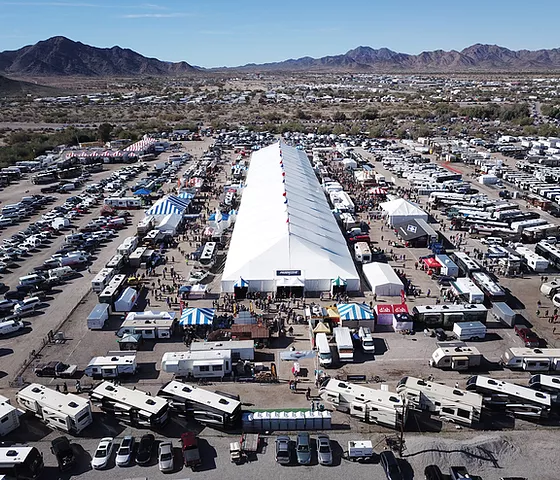
Known as the “The Largest Gathering of RVers in the World,” the Quartzsite Sports,  Vacation, and RV Show draws as many as one million folks every year in January.  For the past 40 years, this otherwise sleepy town has offered vendors space for rock, gem, and mineral shows, flea markets, and the Quartzsite Sports, Vacation & RV Show.

The Quartzsite Big Tent is particularly of interest to hundreds of thousands of RVers, full-time and part-time. Hundreds of vendors gather under this behemoth to sell all sorts of outdoor and RV-related products and services, ranging from the latest gadgets to repairs and upgrades. It’s an RV shopper’s dream come true!

In addition to the shopping opportunities, folks opt to dry camp around the event for days and participate in all sorts of social gatherings and workshops geared towards RV living. It’s definitely a mecca for RV enthusiasts.

Quartzsite is located just 20 miles east of the California border on Interstate 10.  Show dates for the next few years are listed below:

  • January 22nd-30th, 2022
  • January 21st-29th, 2023
  • January 20th-28th, 2024
  • January 18th-26th, 2025

NASCAR Camping

Image Source

โ€œSeasonerโ€ fans will delight in the opportunity to see NASCAR events up close!  Many NASCAR race car events offer camping options for RVers.  Depending on the venue, folks can choose among multiple camping areas across the facility, including full hookup sites, grassy areas for dry camping, and camping right in the middle of the racetrack interior field! RVers can also opt for season passes as part of their camping package.

Races take place all over the U.S. between February and November, but the largest and most popular events include the Daytona 500, Coca-Cola 600, Cook Out Southern 500, and Indy 500, to name a few.

Burning Man

Image Source

“Whether it’s a dream of artistic expression, a yearning to connect with others in a fractured society, or simply a desire to live a more meaningful and authentic life, Burning Man is the place where dreams can and do come true.”

-burningman.org

Burning Man is a multi-day celebration that occurs in the Black Rock Desert in Nevada around Labor Day. The event focuses on the spirit of community and creativity in the form of art, self-expression, and self-reliance. The event is unlike any on the planet, and to truly understand the concept of Burning Man, you simply have to go and experience it for yourself. To an outsider, it can be summed up as a culmination of psychedelic costumes, out-of-this-world art installations, a variety of performances, and of course, lots of partying.

Tickets to the event start at around $500. Folks are encouraged to bring a hefty supply of water and food in their rigs. It is a complete boondocking experience in the desert, so be prepared for extreme heat and the possibility of dust storms.

Albuquerque Balloon Fiesta

Image Source

The Land of Enchantment truly lives up to its name every year at the Albuquerque International Balloon Fiesta. This unique event is said to be the world’s most photographed event and the largest hot air ballooning event.

Nearly 750,000 visitors, many RVers, attend the Albuquerque, New Mexico event that happens for nine days during the first full week of October. Spectators gather to witness hundreds of special shaped balloons glow at night and almost simultaneously ascend in the early morning. It’s quite a magical (or, more appropriately, “enchanting”) sight to behold.

In addition to the awe-inspiring balloon shows, folks can see the balloons up close and meet the flight crew as attendees are allowed to walk around the launch field. Opportunities to assist the flight crews with set-up and experience a private hot air balloon ride are also available.

The 9-day event itinerary is packed with concerts, a chance to shop a variety of vendors, social gatherings, and a wide variety of activities for all ages. RV camping can be reserved on-site at the event or at nearby campgrounds. The event also offers bus transportation to and from the festival.

This coming year, the Albuquerque International Balloon Fiesta is slated for October 1-9, 2022.

Travel To These and More RV Event Bucket List Locations with Peace Of Mind

Whether you are RVing in the deserts of Nevada or New Mexico or in the middle of a NASCAR race track, itโ€™s essential to be equipped with 24/7, all-inclusive roadside assistance when you’re on the road away from home. Thatโ€™s a promise that Coach-Net can offer for RVers. They can also promise other valuable benefits such as Concierge Services, Global Emergency Travel Services, Tire Discounts, Camping Discounts, and so much more.

โ€œIf you own an RV, you owe it to yourself to have the protection you need when you need it most.โ€

-coach-net.com

If you havenโ€™t already, give Coach-Net a call or join now and breathe easier knowing that Coach-Net has you and your family covered!


About The Author: Natalie Henley

Levi Henley and his wife, Natalie, have been full-time RVers for over 5 years. They have also been Coach-Net customers for the same amount of time.  They travel and workcamp around the U.S. in their 26-foot Itasca Sunstar motorhome with their two cats.  They write for multiple RV-related publications and recently co-wrote โ€œSeasonal Workamping for a Living: How We Did It.โ€ You can follow their adventures on the road at henleyshappytrails.com 

RV Protect

Mike S. ~ โ€œI am very pleased I chose Coach-Net! When I needed you, you were there for me!โ€

Share this with your friends:

  • Share on Facebook (Opens in new window) Facebook
  • Share on X (Opens in new window) X
  • Share on Pinterest (Opens in new window) Pinterest
  • Print (Opens in new window) Print
  • Email a link to a friend (Opens in new window) Email
  • More
  • Share on Reddit (Opens in new window) Reddit
  • Share on Tumblr (Opens in new window) Tumblr

Like this:

Like Loadingโ€ฆ

Planning an Epic RV Road Trip in 2022

10 Wednesday Nov 2021

Posted by Coach-Net in RV Information, RV Safety, Tips & Tricks

≈ Leave a comment

Tags

2022 Roadtrip Planning, roadtrip planing, RV Roadside Assistance, RV Roadtrip, RV Safety, RV tech tip, RVing with kids

The euphoria of going on a road trip with family or friends is incomparable. A road trip allows you to travel leisurely, enjoy the journey, and choose remote locations to visit if thatโ€™s what you prefer. However, the success of the trip is largely reliant on adequate planning and preparation.ย  You can comfortably travel in any season if you are well prepared and suitably equipped for the trip.

Basic Steps to Planning Your Road Trip

  • Confirm your destination: If youโ€™re traveling with young kids or itโ€™s your first road trip, itโ€™s preferable to avoid traveling to remote areas or where hiking is required. Prepare for traffic blocks, road work, and poor weather conditions.
  • Select a route: Once you choose your route, start budgeting and saving money for your trip. Look for off-season deals and discounts.
  • Schedule pit stops: Decide where you will take your gas, food, and bathroom breaks. Look for RV campsites where parking is available if you choose to rent an RV. 
  • Pack your bags: Make a list of essential things to carry and what to avoid. List things to keep handy: gadgets, medicines and protective gear.
  • Miscellaneous checks pre-travel: Ensure your travel insurance, health insurance, accommodation, and other bookings are in order. Store important contact numbers and download related apps to your phone.


Checking Your Vehicle Before Your Trip

You should always conduct a complete vehicle audit before you embark on your road trip. This includes checking the wheels, tire pressure, brakes, water levels, and oil. 

  • Tire pressure: Ensure the tires of your outdoor vehicle are inflated to the ideal pressure level. For guidance on the suggested pressure level, check the sticker on the driverโ€™s side door or the inner end of the fuel filler.
  • Tread depth: All modern โ€œP,โ€ โ€œLTโ€ and medium commercial tires have integral wear indicators built into the tread. These indicators are molded into several locations around the tread grooves. When the tread ribs become worn to the point where theyโ€™re adjacent to an indicator, itโ€™s time for a new tire.
  • Engine oil: The dipstick test will protect you against engine breakdowns due to low oil levels.
  • Coolant levels: If your coolant level is low, you could have a leak so be sure to check all radiator and heater hoses.  To add coolant, if needed, be sure to check your owners manual to ensure it is done correctly.
  • Window washer fluid: For an unobstructed view while driving, ensure the washer fluid of your vehicle is at a good level. Use fluid specifically designed for cold weather to prevent the fluid from freezing if your road trip is during the winter.
  • Vehicle lights: Make sure all your vehicle lights, including turn signals, are working well, to avoid confusing or blinding other drivers and creating mishaps.
  • Roadside assistance: You should always be prepared for the unexpected. A Coach-Net membership helps to ensure you have help if your RV suffers a breakdown during your trip.


Essential Items to Include in Your Packing

  • Important documents and vehicle papers: These include your vehicle registration documents and manual, roadside assistance info and relevant contact number, your driver’s license and travel insurance.
  • Navigator and battery pack: GPS can guide your direction and help check you are within the required speed limit. It can also help you find the nearest gas and service stations. A battery pack can meet the re-charging needs of your phone, music player, and camera.
  • First-aid kit and torch: A basic first-aid kit should always be in your vehicle during your road trip. Minor wounds and small medical needs can be immediately met with a stash of bandages and antiseptic creams. A quality flashlight or lantern is important to have handy, especially for when your vehicle stalls in the dark and you need to inspect your engine.
  • Miscellaneous vehicle necessities: Items needed for maximum comfort and efficiency during your road trip include hands-free phone packs, wheel wedges, windscreen covers, travel pillow, and sunglasses. Keep loose coins in your vehicleโ€™s glove box to accommodate road toll and parking fees.
  • Entertainment: Build a fun music playlist that is enjoyable for all on the road trip. Travel games like I-Spy work well for long road trips with kids.

Author: Tim Setterfield

RV Protect

Karl P. UT ~ย  โ€œKurt from Quality Tire was exceptional. He came and pulled both sets of back tires. The inside tires on both sides of our motor home had 0 pressure. Both Valve stems had been damaged for some reason. He replaced the valve stems on both tires, checked and filled all 6 tires to correct pressure. He was a pleasant and pleasurable person to work with. We were called by Coach-Net several times to make sure everything went as it was supposed to. Thank you to all the Coach-Net Representatives and to Kurt from Quality tire. It took something that was a pain and made it a pleasure.โ€

Share this with your friends:

  • Share on Facebook (Opens in new window) Facebook
  • Share on X (Opens in new window) X
  • Share on Pinterest (Opens in new window) Pinterest
  • Print (Opens in new window) Print
  • Email a link to a friend (Opens in new window) Email
  • More
  • Share on Reddit (Opens in new window) Reddit
  • Share on Tumblr (Opens in new window) Tumblr

Like this:

Like Loadingโ€ฆ

Fine-Tuning Your RVโ€™s Climate

25 Wednesday Aug 2021

Posted by Coach-Net in RV Information

≈ Leave a comment

Tags

RV air conditioner, RV Life, RV roof air conditioner, RV tech tip, RV Tips, Travel Tips

Comfort is derived from a range of factors, but temperature is one of the most important. According to Thought Co, the ideal temperature for both comfort and productivity is around 71.5 fahrenheit – whatโ€™s interesting, however, is that this can change based on a range of factors including gender, weight and age. Furthermore, humidity plays an important role, and is once again a relative factor – everyone is different. In the RV environment, comfort is everything – thereโ€™s nothing worse than not being able to enjoy your space while out on the road. Creating the perfect climate starts with a thermostat fit for purpose.

Thermostat essentials

A smart thermostat is an efficient and economical way to monitor your RVs thermal environment. Smart thermostats use less energy and are capable of finely tuning the temperature they control, using machine learning to learn where your comfort zone is and then keeping things appropriate to that. As humidity and outside temperature rise and fall, they can adjust to make things a little more comfortable. Whatโ€™s more, as an RV is often off-grid, you can have a greater control over how your smart thermostat works.

Fine-tuning humidity

Humidity is the other half of the climate question. Extremely arid or wet environments can enhance and magnify the heat conditions of the environment. The gold standard in managing this is through a dehumidifier. Road insurance company Progressive provides guidance in their LifeLanes magazine; a 30-pint dehumidifier is ideal for a mid-sized RV, and will help you to manage the humidity levels within the RV with relative ease. Again, humidity is relative – your comfort level will be specific to you. For the most part, humans enjoy a 40-60 percent humidity level before it starts to become uncomfortable.

Changing needs

The temperature of your RV should be cooler at night and warmer in the day, if required – this is basic guidance for effective and restful sleeping. Similarly, humidity might change as you need it; a skin condition will often benefit from higher humidity levels, but someone diagnosed with asthma may prefer more dry air. As always, you should make adjustments as they come. A good quality thermostat can underpin all of this by providing minute changes at the flick of a wrist, and by having presets for different times of the year or where youโ€™re traveling too. Moving into a higher humidity area, like Florida, from somewhere more arid? You can program that into the thermostat and dehumidifier to react to your geographical changes and keep your environment running smoothly.

With that environment and climate in place, you can enjoy full comfort in your RV. You want it to be your oasis, a place of calm and peaceful collection after a day on the road. Climate is a huge part of that, and will always make you pleased to return to your mobile home.


Author: Alicia Rennoll

RV Protect

Dennis F. ~ “Jan went above and beyond my expectations! She checked on us hourly with such care until we had our coach towed to the shop. She deserves a medal for resolving our situation!”

Share this with your friends:

  • Share on Facebook (Opens in new window) Facebook
  • Share on X (Opens in new window) X
  • Share on Pinterest (Opens in new window) Pinterest
  • Print (Opens in new window) Print
  • Email a link to a friend (Opens in new window) Email
  • More
  • Share on Reddit (Opens in new window) Reddit
  • Share on Tumblr (Opens in new window) Tumblr

Like this:

Like Loadingโ€ฆ

What Is a Portable Macerator Pump, & Do You Need One?

05 Wednesday May 2021

Posted by Coach-Net in RV Information, Tech Tips

≈ Leave a comment

Tags

Macerator Pump, Portable Macerator Pump, RV Camping, RV Dump Station, RV Dump Tips, RV Macerator Pump, RV tech tip

Have you ever RVed in a friend’s driveway or parked more than 25 ft from a sewer hookup? If so, you could have probably benefitted from a macerator pump. Some RVs come with macerator pumps built-in. For those who have never heard of one of these devices, let’s discuss what it does and how it can help RVers.

A macerator pump is a motorized pump with a blade that turns your black tank waste into a slurry. Think of it as a garbage disposal for an RV black tank. Because the waste is pumped into the hose, it is ideal in situations that require you to dump uphill or long distances. Since the waste is chewed up into a slurry, you can use a small hose, too, even a 1″ garden hose. Another advantage a macerator pump has is the broader availability of dumping locations, such as your home sewer system (if legal in your municipality).

How do you use a macerator pump?

Macerator pump connected to a 90-degree clear elbow adaptor. Source

The pump itself has a large bayonet fitting that hooks directly to your sewer dump outlet. It’s the same connector style as the large 3″ sewer hoses. The pump will have a discharge outlet to attach the waste hose. Some brands will have a third connector that allows you to connect a freshwater hose to backflush the system after dumping.

Note: If you are using a garden hose to dump, make sure you only use that hose for dumping, as it will always be considered contaminated.

To use the pump, attach all of the hoses, connect a 12V power source, open the black tank and turn on the pump. It will start chewing up and pumping the waste through the hose. Once the black tank is empty, turn the pump off. You may wish to use the backflush option to fill your tank with a little bit of water and then turn the pump back on until it is empty again.

It can be helpful to connect a transparent sewer hose adapter between the RV and the pump so that you can see when you have adequately flushed your tank out. Flushing your tank is essential if you plan on storing your RV after dumping. Waste left in the tank can accumulate and dry up inside the tank itself if it is not flushed completely. Once your black tank is sufficiently empty, turn the pump off, close the black tank, open the grey tank, and turn the pump on to flush the line.

If your sewer dump hookup is at an angle, you will probably have no problems pumping all the liquid out. Many motorhomes have a sewer compartment that forces you to hook up the pump parallel to the ground. This can make it difficult to empty all of the liquid.

If your sewer compartment looks like this, you may need to use an extension piece to get it past your compartment, and then use a 90-degree adapter in order to get a complete drain. Photo by Levi Henley.

That is where the transparent adapter and making sure you have adequately flushed the system before unhooking it comes into play. Any lingering water that comes out should be clear as opposed to, well, any other color.

The following video shows how to use a portable macerator pump.

Are there any cons to macerator pumps?

Though macerator pumps can allow you to dump more easily sometimes, they come with their share of problems too. For starters, they don’t make dumping your tanks any faster. The traditional way to drain an RV tank with a 3″ sewer hose can be done in about 10 minutes or less. By the time you hook up everything, thoroughly flush everything, etc., you will have spent at least 20 minutes dumping your tanks with a macerator. A small price to pay if you have to dump uphill.

Some other cons of portable macerator pumps are:

  • They require maintenance.
  • It is possible to find yourself in a situation where the pump builds up excessive pressure causing damage to your system. You can avoid this by ensuring the drain valves are open whenever the pump is running. Still, a mistake in this area can cause quite an unpleasant mess.
  • With all the flushing and slower drain process, it generally takes a bit more water to dump your tanks.
  • They aren’t cheap.

How much does it cost?

Given a macerator pump’s usefulness, it would seem like every RVer would want to carry one around just in case. Unfortunately, they are not the cheapest RV accessory you can find. On average, they run between $200-$300. So it’s not an item that RVers typically have if they don’t run into situations that require them often. You can find popular brands like Flojet and Shurflo on Amazon, Camping World, and other RV retailers.

Should I get one?

If you find yourself needing to dump your tanks at home or regularly camp where the sewer dump is far away or uphill from your RV, it may be worthwhile. Many RVers who stay exclusively at full hookup campgrounds won’t find a need for one. However, if you find yourself up a creek, it’s nice to know of this paddle available to you and your RV.


About The Author: Levi Henley

Levi Henley and his wife, Natalie, have been full-time RVers for over 5 years. They have also been Coach-Net customers for the same amount of time.  They travel and workcamp around the U.S. in their 26-foot Itasca Sunstar motorhome with their two cats.  They write for multiple RV-related publications and recently co-wrote โ€œSeasonal Workamping for a Living: How We Did It.โ€ You can follow their adventures on the road at henleyshappytrails.com 

RV Protect

George N. ~ “We have used Coach-Net’s services several times and always have positive results. And without a doubt the cost of the annual coverage is hands-down one of the best deals in the industry.”

Share this with your friends:

  • Share on Facebook (Opens in new window) Facebook
  • Share on X (Opens in new window) X
  • Share on Pinterest (Opens in new window) Pinterest
  • Print (Opens in new window) Print
  • Email a link to a friend (Opens in new window) Email
  • More
  • Share on Reddit (Opens in new window) Reddit
  • Share on Tumblr (Opens in new window) Tumblr

Like this:

Like Loadingโ€ฆ

Fun Coastal Towns to Go RVing in Rhode Island

29 Thursday Apr 2021

Posted by Coach-Net in RV Information

≈ 1 Comment

Donโ€™t let the smallest state in the U.S. fool you.ย  Besides 40 miles of pristine coastline, Rhode Island is packed with all kinds of fascinating sites and attractions.ย  It is famous for its luxurious mansions, charming villages, bustling Providence metropolis, scenic drives and trails, artsy and historical districts, and unique year-round celebrations and events. Your RV family may not have enough time during your entire camping stay to experience even a fraction of the wonders and adventures hidden within the fluid borders of the Ocean State.

For the best traveling and weather, go RVing in Rhode Island between late spring and early fall.  Summers are prime time for campers.  Fewer tourists, better prices, and cooler weather are typical during the shoulder seasons of spring and fall.  The following are a few exciting and adventurous locations to consider visiting and setting up camp on your next RV road trip.  Make memories with your RV traveling crew in these places:

RVing Near Point Judith

Fishermenโ€™s State Park and Campground is the closest campground to Point Judith. This village and small cape is located on the coast of Narragansett. Not only is it home to the lighthouse of its namesake, but it is also where you will find the year-round ferry service that connects the mainland to Block Island. Cars can be brought aboard but not motorhomes, travel trailers, or fifth wheels. There are no campgrounds on Block Island. Besides a 30-minute ferry ride, folks can travel to Block Island by plane.

Steps down the Mohegan Bluffs to the beach

Block Island is home to many natural wonders and historic landmarks like the Mohegan Bluffs and Block Island Southeast Lighthouse. The Mohegan Bluffs rise above sea level about 200 feet. Block Island Southeast Lighthouse is located on the bluffs and has been moved several times due to bluff erosion. 141 steps down the bluffs allow access to a secluded beach below.

Other noteworthy points of interest on Block Island include Block Island Historical Island Museum, the 1661 Animal Farm, which houses a zebra/donkey hybrid, and the Block Island National Wildlife Refuge.


Set Up Camp in Charlestown

Charlestown, located in the southwest portion of the state, is one of Rhode Islandโ€™s best-kept secrets with its miles of secluded beaches. Visitors can enjoy hours on the shoreline, explore nearby attractions, and hike around nature centers. Plus, with RV parks and campgrounds like  Charlestown Breachway and Burlingame State Park in town and a few more just a few minutes away, RVers will have even more time to take in the beauty and charm of Charlestown.

Charlestown contains several beaches that are mostly untouched, with only some development. Some beaches include Blue Shutters Town Beach, Charlestown Town Beach, East Beach State Beach, and Charlestown Breachway State Beach.

Shuck oysters at 401 Oyster Company

If you get a craving for some seafood after spending time on the beach, go to 401 Oyster Company for some freshly shucked oysters and tour its oyster farm. The 1.5-hour tour includes a boat ride across the pond to view several stages of oyster growth and learn about the business of oyster farming.

For a change in scenery, stop by the Ninigret National Wildlife Refuge. The refuge contains diverse upland and wetland habitats, including grasslands, shrublands, wooded swamps, and freshwater ponds. Visitors can enjoy outdoor activities like fishing, kayaking, hunting, wildlife viewing, and photography.

Frosty Drew Nature Center and Observatory

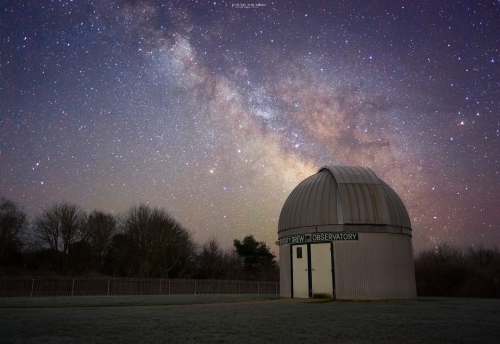
At night, folks can head on over to the Frosty Drew Nature Center and Observatory for some stargazing. The observatory is located in Ninigret Park, which hosts several annual events. The Seafood Festival is the most popular. Named one of the Top 100 Events in America by the American Tour Bus Association, the Seafood Festival happens every August and includes booth after booth of the finest seafood and lobster from the east coast.

Travel and RV Awhile near Westerly

Located on the southwestern shores of Rhode Island, the small coastal town of Westerly offers a slew of nearby popular attractions that range from miles of beaches to miles of hiking trails and nationally recognized historic places to kiddie rides and amusement parks. There are no RV parks or campgrounds located in Westerly, but a few are just outside of town in Bradford and Charlestown, Rhode Island.

One of the oldest carousels in the country, the Flying Horse Carousel.

Two of the most popular beaches in the state are Misquamicut State Beach and Atlantic Beach Park. Although a mere half-mile long, Misquamicut State Beach is packed to the gills in the summer. Beachgoers sunbathe, build sandcastles, and boogie board, among other activities. Atlantic Beach Park packs beach fun with amusement park thrill rides. The small amusement park has been operating since 1921 and includes rides like a carousel and a dragon roller coaster. Visitors can access the beach directly from the park. Watch Hill Beach has its own carousel as well, the Flying Horse Carousel. It is one of the oldest operating carousels in the nation, starting up in 1883. 

Another way to get some Vitamin D is to go on a hike. The top locations for this activity are Napatree Point Conservation Area and Dr. John Champlin Glacier Park. The conservation area is situated on a slender 1.5-mile peninsula that touches the Block Island Sound. The seashore trail offers picturesque views of Little Narragansett Bay, the open waters of the sound, and Fishers Island. Hikers may want to bring their binoculars for some wildlife and bird watching.

For a more varied topography, consider taking the family to Dr. John Champlin Glacier Park. Formed during the Ice Age, the 134-acre park features examples of kettle and kame topography, carved canyons, ridges, and boulders. Information boards explain each natural phenomenon as you travel down the easy trails.

After sampling some of Westerlyโ€™s finest entrees and brews, take a trip back in time at some of the most historic landmarks near the town. Westerly Public Library, which opened in 1894 as a tribute to Civil War soldiers, houses two art galleries besides its massive literature and resource center. Westerly Armory, built-in 1901, currently displays a variety of both military and community artifacts. Another museum, the Babcock-Smith House Museum, is a historic house from the 1700s. Among its many highlights, both Benjamin Franklin and General George Washington once visited the home.

Watch Hill Lighthouse

Two additional places RV families may enjoy are the Watch Hill Lighthouse and Living Shark Museum. The Watch Hill Lighthouse was constructed in 1855 after the original lighthouse, built in 1807, succumbed to erosion. The square tower of Westerly granite stands at 45 feet. The accompanying museum has a collection of artifacts, including lighthouse keepersโ€™ documents, photographs of area ships and storms, and the lighthouseโ€™s original Fresnel lens. While the lighthouse guides over water, the Living Sharks Museum dives below the surface with its array of exhibits on all things Jaws: shark film memorabilia, shark fossils, and stories of encounters between sharks and humans.

Small But Mighty Cool State

Rhode Island has much to offer RVers, both young and young-at-heart. Whether you decide to explore historical landmarks, get back to nature with sand and surf, or both, RVers can find an itinerary to match their traveling mode. For more information on things to do, statewide events, and camping options, go to visitrhodeisland.com. Plus, donโ€™t forget to pack the best roadside assistance Coach-Net to help get you where you need to go safely.


About The Author: Natalie Henley

Natalie Henley and her husband, Levi, have been full-time RVers for over 5 years.  They have also been Coach-Net customers for the same amount of time.  They travel and workcamp around the U.S. in their 26-foot Itasca Sunstar motorhome with their two cats.  They write for multiple RV-related publications and recently co-wrote โ€œSeasonal Workamping for a Living: How We Did It.โ€ You can follow their adventures on the road at henleyshappytrails.com.

RV Protect

Nick O. ~ “If I could give this team 6 stars, I would. Absolutely incredible service, in the middle of the night, in a very remote region. These guys were unbelievable every step of the way, not only ensuring we got the vehicle out, but that we found a place to stay for the evening.”

Share this with your friends:

  • Share on Facebook (Opens in new window) Facebook
  • Share on X (Opens in new window) X
  • Share on Pinterest (Opens in new window) Pinterest
  • Print (Opens in new window) Print
  • Email a link to a friend (Opens in new window) Email
  • More
  • Share on Reddit (Opens in new window) Reddit
  • Share on Tumblr (Opens in new window) Tumblr

Like this:

Like Loadingโ€ฆ

ST vs. LT Tires: What’s the Difference?

03 Wednesday Mar 2021

Posted by Coach-Net in RV Information, Tech Tips

≈ 9 Comments

Tags

Overloading Tires, purchasing rv tires, RV Info, RV Tips, RV Tire Essentials, RV tire safety, RV Tires

ST vs. LT Tires: What's the Difference?

Are you looking for a little entertainment? Head over to your favorite RV forum and search for “ST vs. LT tires,” and don’t forget the popcorn. The debate on which one is better for travel trailers and fifth wheels has raged on for years. It probably isn’t going to be settled anytime soon, either. If you are new to RVing, going through the forum discussions will present you with good information and wrong information. It can be challenging to figure out which is which. Hopefully, by the end of this article, you will understand how these two types of tires differ, so you can decide what is right for you.

What are LT Tires?

Cars will have P-type or passenger tires designed to give the buttery-smooth ride felt in most cars. If you want to carry a heavy load, P tires will bend and flex more than they should. Just like a wire gets hot when you bend it back and forth, a tire does too. Heat is the arch-nemesis of tires and causes many blowouts.

LT stands for light truck tires, and they are designed for heavier duty trucks and SUVs that need to carry more weight. They have thicker sidewalls and heavier duty construction than P-type tires. The thicker sidewall and materials used in the tire make it more rigid and harder to bend and flex as much as passenger tires.

Though they give a stiffer ride, they are still designed with the passengers’ comfort in mind. Manufacturers attempt to develop these tires to hold up and dissipate heat under a load while still flexing and rolling enough to provide a ride that is as comfortable as possible. Their tread is designed to have maximum traction under various road conditions and grip the road under a powered axel.

Though LT tires were not explicitly engineered for trailers, some travel trailers and fifth wheels come with this type of tire installed off the lot. That doesn’t mean LT tires are the best option for every camper out there. There are pros and cons to everything in life.

What are ST Tires?

Travel trailers and fifth wheels do not need to feel nice to passengers while traveling down the road since no one should be in them at that time. They don’t need the traction to grip and propel you forward because their job is to be pulled behind a vehicle. ST stands for “special trailer,” and they are engineered to hold up lots of weight. Their rigid walls prevent trailer sway. The tread design provides low resistance for ease of towing and better gas mileage.

They don’t just look different externally. Tim Fry, a senior development engineer with Goodyear Tire & Rubber Company stated, “The major difference is reflected in the polyester cords used in ST tires. These cords are bigger than they would be for a comparable P or LT tire. Typically, the steel wire also has a larger diameter or greater tensile strength to meet the additional load requirements. Because of the heavier construction for an equal volume of air space, an ST tire is designated to carry more load than a P or LT tire.”

On top of the internal differences, the rubber used in ST tires typically has more chemicals that resist aging and UV rays. The rubber compound itself is usually harder, giving it more sidewall strength. In short, ST tires are designed to be put on a trailer.

Trailer Tire Safety

A lot is riding in your RV tires, literally. It’s vital to follow tire safety when towing a travel trailer or a fifth wheel. Most tire blowouts are a result of either old tires that come apart or heat buildup.

Heat Buildup

Proper Inflation: Proper inflation is listed in two places. There will be a sticker located somewhere around your RV door, which has the GVWR, tire size, and inflation pressure. The tire itself will list the cold inflation pressure on them. Underinflated tires will bend and flex the tire more as the wheel travels down the road. This causes heat to build up, and remember, heat is the arch-nemesis of tires.

Overloaded Trailer: Overloaded tires cause flexing and add dangerous stress to your tires, resulting in blowouts. Your travel trailer or fifth wheel is not intended to have more weight than the GVWR states on that sticker mentioned above. GVWR stands for Gross Vehicle Weight Rating, and it is a measurement of all the things in the RV plus the weight of the RV itself. On top of the GVWR, each tire has a maximum load rating as well. Goodyear has a handy index and instructions on how to find your tiresโ€™ load index here.

Tire Blowout

There are two ways to find out if you are overloaded. Go to a truck stop with a CAT scale without your RV and weigh your towing vehicle, then go over the same scale with your RV attached. Subtract your vehicle’s weight from the second weight, and you have the total weight of your RV.

The best and second method requires you to find a place that specifically weighs RVs like RVSEF or Escapees RV Club Smart Weigh Program. They can weigh each tire separately and tell you if any tire is overcapacity.

Speed: If your RV is equipped with ST tires, they are not meant to be driven over 65 mph. You see and hear of people towing their trailers down the road at 80+ mph all the time. You also hear of ST tires blowing out all the time. Coincidence? There are some ST tires on the market, such as the Goodyear Endurance, which has an N speed rating allowing for a max speed of 87 mph. You can find the speed rating after the load rating on a tire. If your ST tire has no letter, then the speed rating is 65 mph.

Tire Source & Speed Rating Chart

The source and speed rating chart can be found here.

This writer believes that towing an RV down the road is safer at no faster than 65 mph, though. On top of the safety factor, the faster you pull that thing, the worse your gas mileage is. Look at it this way, a 500-mile trip will take 7.6 hours at 65 mph and 6.6 hours at 75 mph. Is the safety of your family and RV worth saving an hour? If you absolutely must make sure your speed needle is at the exact number that the speed limit signs state, make sure your tire is rated for that speed.

Age

Most people don’t put enough miles on their RV tires to wear them out. But tires do have an expiration date. Tires on a trailer should be replaced every 5 to 6 years. That is generally a good rule for ST or LT tires on a trailer. Trailer tires are constantly under a heavy load, and they tend to sit in storage for long periods between use, which causes them to break down faster.

Before each trip, inspect your tires for any cracks around the treads or the tire’s sidewall. There should be no bulges or defects of any kind. Remember, the 5 to 6-year rule only applies if your tires aren’t showing defects before that time. Many factors may require them to be replaced sooner.

The ST vs. LT Debate

Some RVers feel that LT tires are superior to ST tires and that no one should use ST tires. This claim can be found in many RV forums. It is usually based on anecdotal information or personal stories.

While individual stories and reviews of tires are important, it is hard to argue with an entire tire industry spanning global manufacturers and companies that say ST tires are a tool developed specifically for trailers. With tire manufacturers coming out with new ST tires with higher speed ratings, some of their arguments do not hold water.

Some RVers just want LT tires on their travel trailers and fifth wheels that didn’t come with them. On the flip side, some RVs come with LT tires from the factory. However, if you want to switch to LT tires, you must make a few considerations.

  • LT and ST tires do not have the same load rating when comparing size for size, so make sure whatever tire you choose has a sufficient load capacity for your RV. If the tires you are switching to have a higher load capacity, that does not automatically increase your GVWR. It’s never safe to overload your RV.
  • You will probably have to choose a larger tire size to find an LT tire of equal or greater load capacity. Make sure there is sufficient clearance all around the tire.
  • When you change your tire size, you will need a properly sized wheel as well. Changing out tires and wheels can be rather costly.

Conclusion

At the end of the day, it boils down to this. Tire manufacturers state that they have designed ST tires for the loads and motion that travel trailers and fifth wheels experience. Therefore, it is reasonable to assume that your best gas mileage and towing feel will probably come from ST tires, especially if that is the type of tire your RV came with. If your current ST tires donโ€™t have the speed rating you like, or you don’t feel comfortable with the no-name brand tires that came with your rig, there are several options of high-end ST tires to choose from.

LT tires are not wrong or right for the most part. They just aren’t engineered for that job necessarily. Can you use them? Yes. If they are the proper weight rating and size for your RV. Many people run them with little problems at all, and some RVs come with them.

Should you switch to them if your RV didn’t come with them? It’s up to you but think of it this way. A rounded shovel is suitable for digging in the ground, a snow shovel is designed to glide over the top of the ground to move snow. Both are shovels, and technically you can use the smaller round tip shovel to move snow, but it won’t do the job as well as the snow shovel.

The snow shovel could be used to dig a hole, but it would be difficult, and you would probably damage the snow shovel in the process. Similarly, tire engineers tell us that ST tires were designed for the loads and force a trailer will experience. LT tires were engineered more for the loads and forces the towing vehicle will have. It’s best to always ensure that you are not only using the right tool for the job, but you are using it properly too.


About the author: Levi Henley

Levi Henley and his wife, Natalie, have been full-time RVers for over 5 years. They have also been Coach-Net customers for the same amount of time.ย  They travel and workcamp around the U.S. in their 26-foot Itasca Sunstar motorhome with their two cats.ย  They write for multiple RV-related publications and recently co-wrote โ€œSeasonal Workamping for a Living: How We Did It.โ€ You can follow their adventures on the road at henleyshappytrails.comย 

RV ProtectEmily. ~ “Help was on the way within 1 hour of my phone call. The call agent was outstanding, gave accurate info and expected service time, and actually called to follow up on service. This was my first time using Coach-Net and I will recommend them to everyone I know. Exceptional service all the way around, thank you!”

Share this with your friends:
  • Share on Facebook (Opens in new window) Facebook
  • Share on X (Opens in new window) X
  • Share on Pinterest (Opens in new window) Pinterest
  • Print (Opens in new window) Print
  • Email a link to a friend (Opens in new window) Email
  • More
  • Share on Reddit (Opens in new window) Reddit
  • Share on Tumblr (Opens in new window) Tumblr

Like this:

Like Loadingโ€ฆ
← Older posts
Newer posts →

Subscribe

To subscribe to our monthly enewsletter, visit the homepage www.Coach-Net.com

Coach-Net Members

Access your benefits and services by logging in to My Coach-Net

Categories

  • Favorite Recipes
  • Getting To Know You
  • Healthy Lifestyle
  • Holidays in your RV
  • Kids and Camping
  • National Parks
  • Roadside Assistance
  • RV Information
  • RV Newbie
  • RV Safety
  • Tailgating
  • Tech Tips
  • The Great Outdoors
  • Tips & Tricks
  • Travel Destinations
  • Traveling with your Pet
  • Uncategorized
  • We Love It. We Live It.

Archives

Follow Us

  • Facebook
  • X
  • Instagram
ยฉ Coach-Net. All Right Reserved. Unauthorized use and/or duplication of this material without express and written permission from this blogโ€™s author and/or owner is strictly prohibited. Excerpts and links may be used, provided that full and clear credit is given to Coach-Net and with appropriate and specific direction to the original content.

Powered by WordPress.com.

Loading Comments...
%d