How A VPN Can Keep RVers Safe on The Internet

Tags

, , , ,

With email scams and high-profile hacks making the news as of late, some RVers may wonder if their data is safe when they connect to the internet. Large companies store our data and know more about us than we do. It is also legal for your internet service provider (ISP) to not only log but sell your browsing data to advertisers. Because we use a combination of public WiFi and our phones to connect to the net, RVer’s data is vulnerable in many ways. Before going into what a VPN is and how it can help keep you safe, let’s dive into the vulnerabilities.

ISP Data Collection

It is easy to think that your ISP is just selling a list of your browsing history for companies to pour-over. Unfortunately, for most companies interested in your data, that list isn’t all that helpful. It’s what browsing history can tell them. You may not know it but how you conduct yourself on the internet says more about you than just the sites you visit. Below is a screenshot of some of the data Google has collected about me.

Most of those categories and interests can be gathered by anyone who knows me. I assume data mining companies like google would know I have an interest in politics and the outdoors. But oddly, I have never told Google I don’t have children. I don’t search the internet for not having children. How do they know?

No one except for a select few knows precisely what Google’s data mining algorithms look like, but clicking the category gives us a little insight.

As you can see, though I never said it directly to Google or made searches for it, Google’s software could connect the dots.

A VPN won’t stop Google from logging your searches if you are logged into your google account or using chrome. However, if Google can figure out every aspect of your life and personality with limited access to your data, imagine what your ISP can collect and sell about you. They are the gatekeepers of all of your internet activity. They may know private information about your health, finances, and family.

To add to this problem, Google stores the information about you somewhere. So does your ISP. By allowing these companies to create this file on you, you have to trust their ability to keep it secure from hacks. Some of the high-profile data breaches of the recent past have shown that they can’t always keep your data safe.

Public WiFi Dangers

When you connect to a public WiFi network, such as at a coffee shop, RV park, or airport, you join a network. Imagine every RV using park WiFi is connected with invisible wires. That means, in theory, all data going from your laptop, phone, or smart TV can be intercepted before it leaves the park’s router.

Some public networks are very insecure, and this data interception can be done easily with a smartphone. This can leave any information you send over public networks vulnerable to hackers attempting to steal information about you. There are security measures that many sites like banks and email take to encrypt the data you put into them. Much of that relies on the security measures the site your visiting takes.

How A VPN Works

In short, a VPN or virtual private network creates an encrypted connection to the VPN company’s server. When you choose to go to coach-net.com using a WiFi connection in a standard internet connection, your data makes several stops before returning a response. But the simple version is the ISP contacts the server where the information you want is stored and returns the response to the park’s router. The router gets the information back to your specific device by assigning you a unique address known as a local IP address.

There are several ways a hacker might intercept this information. Most of them involve finding ways to trick your system or the parkโ€™s into running all the data through their device first. Most major VPN companies use sophisticated methods of swapping encryption keys to ensure you are connected to their server, and your connection is encrypted.

Once you have a connection to the VPN network, all communication to websites and the internet goes first through the VPN and is encrypted. This hides your internet traffic from your ISP and hackers. Anyone attempting to intercept the information will get a bunch of gibberish that would take thousands of years to crack, even with the most sophisticated computer systems.

How To Get A VPN

Remember that when you use a VPN company, you are sending your data through their servers. So make sure the company you are using has a good reputation and doesn’t log traffic. It is a good idea to stay away from free VPNs, as many of those log data to make their money.

A few of the top VPNs on the market today are ExpressVPN, NordVPN, and Hotspot Shield. All of them are fast, secure, and easy to use. For the most part, all you have to do is sign up, download the software, and press a button to turn it on when you browse the internet.

A Coach-Net plan can offer peace of mind and prevent you from being stuck on the road. Using a VPN while on the net can do the same for your sensitive data.


About The Author: Levi Henley

Levi Henley and his wife, Natalie, have been full-time RVers for over 5 years. They have also been Coach-Net customers for the same amount of time.  They travel and workcamp around the U.S. in their 26-foot Itasca Sunstar motorhome with their two cats.  They write for multiple RV-related publications and recently co-wrote โ€œSeasonal Workamping for a Living: How We Did It.โ€ You can follow their adventures on the road at henleyshappytrails.com 

RV Protect

Dale K. ~ “It was a great experience in a bad situation. Everyone was just great from the time we called until we got back on the road. First-class service!”

5 RV Air Conditioner Tips for Summer Camping

Tags

, , ,

RV camping is awesome because it allows you to get out into nature while still staying comfortable. No matter where you go, youโ€™ll have your bed, a bathroom, and even a kitchen in tow. Not only that, youโ€™ll also have a furnace for when it gets coldโ€”and for those hot summer months that are just around the corner, an air conditioner. Thatโ€™s what weโ€™re going to be talking about today.

For the most part, using your RV air conditioner is pretty straightforward. Turn it on, adjust the thermostat if you have one, and let it do its thing. That said, there are some things you should know about RV air conditioners before you set out on your first summer camping trip. Knowing these things will help you keep your RV A/C in tip-top shape for years to come.

Check the Shroud

If you look at your air conditioner from the outside of the rig, the first thing youโ€™ll see is not the A/C itself, but the plastic shroud that goes over it. Many people believe these shrouds are just for looks, but this isnโ€™t the case at all. These covers actually do the very important job of keeping dirt and debris out of the A/C. Since a dirty air conditioner wonโ€™t work well, you definitely want your shroud to be in good shape.

The unfortunate thing is that because these A/C covers are plastic, the hot sun often causes them to become brittle. Once this happens, something as simple as camping in high winds or driving under low-hanging branches can break the shroud.

For this reason, we recommend visually inspecting your RV A/C cover at least a couple times a year to ensure itโ€™s still doing its job well.

Care for the Coils

If you remove the A/C shroud, youโ€™ll notice a set of metal coils on the air conditioner. These coils must be clean and straight in order to work effectively. Unfortunately, fine dust can sneak through the cover, creating a dirty coating on the coils. Additionally, the coils can very easily become bent out of shape.

To combat these problems and keep your A/C up and running, you will want to inspect the coils a couple of times a year. You can gently vacuum them, spray them clean with a spray bottle of water with a few drops of mild soap, and straighten the coils carefully with a fin comb when necessary.

Clean the Filter

If you head inside your RV and look up at the A/C unit, youโ€™ll notice a removable plastic cover. Just inside this cover, at the air intake, is an air conditioner filter that can become quite dirty quite fast.

Obviously, if your filter is dirty enough to block airflow, the A/C unit wonโ€™t be able to function properly. Itโ€™s incredibly important that you clean or replace your air conditioner filter at least once every 6 months, and even more often if you use the A/C on a regular basis.

These filters can be washed in warm water with gentle soap a few times before they must be replaced by a new filter. If you can’t find a filter in the correct size when it does come time to replace it, you can purchase a larger filter and simply cut it to size.

Park in the Shade

RVs arenโ€™t the most well insulated things in the world, and a small RV air conditioner has to work hard to lower the temperature even just 10 or 15 degrees. In fact, no RV A/C is made to lower the room temperature more than 16 degrees below the outside temperature.

With this in mind, itโ€™s in your best interest to park in the shade if you can, where the temperature can be as much as 20 degrees lower than if the rig was parked in full sunlight. This will help keep your home-on-wheels as cool as possible without overworking your air conditioner.

Ensure You Have Enough Power

Finally, it is very important that you ensure you have enough power before running your A/C.

An air conditioner compressor requires quite a lot of power as it kicks on (after which it drops off a bit), and attempting to go through this process while plugged into a 15- or 20-amp outlet will eventually hurt your compressor and can be a fire hazard. The same can be said of attempting to start two A/C units simultaneously when plugged into 30-amp electric.

Instead, the two units should be started at different times, so they arenโ€™t both drawing the max amount of electricity at the same time.

If you often find yourself in situations that require you to run your air conditioner when plugged into 20 amps or when using a smaller generator, you might consider investing in a โ€œsoft startโ€ upgrade that makes this power draw more gradual rather than letting it happen all at once.


About the author: Chelsea Gonzales

Chelsea has the amazing opportunity to take part in full-time RV living and traveling with her tiny tribe. She homeschools her five-year-old son as they travel, and takes full advantage of their unique situation by using the entire world as her sonโ€™s classroom. A group of total Disney fanatics, Chelsea and her family often find themselves in the Orlando area in order to visit the Disney parks, but they have also visited over 25 of the 50 states with plans to see many more along the way. No matter where her travels take her, Chelsea enjoys riding bikes, gazing at beautiful sunsets, finding new coffee shops, Irish dancing, and sitting around a campfire with her family.

You can join her adventures through her blog, Wonder Wherever We Wander.

RV Protect

Mario L. ~ John, your customer service rep, was awesome. George, the driver who fixed my tire, was incredible. I highly recommend your service.” 

Natural Beauty Awaits RVers in Washington’s National Parks

Tags

, , , ,

Our National Parks belong to each of us, and they are natural places to learn, exercise, volunteer, spend time with family and friends, and enjoy the magnificent beauty of our great land.”

-George W. Bush

Announcement of National Park Week (April 16, 2008)

From the mountains to the beaches and everywhere in between, Washington’s three national parks feature an array of ecosystems, wildlife, and outdoor activities that everyone can appreciate and enjoy. With summer already in full swing, RVers are busy finalizing last-minute camping trips, and many will be flocking to the Pacific Northwest. 

Who could blame them when you have breathtaking scenery, perfect cool weather, and plenty of outdoor activities just waiting right outside your RV door. Check out all the fun you and your traveling crew could be experiencing in Washington’s National Parks.

Rainforests and Beaches in Olympic National Park

Hoh Rain Forest in Olympic National Park

Ever camped in a rainforest? The Hoh (pronounced “Hoe”) Rain Forest is left of an ecosystem that once stretched across the Pacific coast from southeastern Alaska to the central coast of California. According to the National Park Service, what remains is “one of the finest remaining examples of temperate rainforest in the United States,”

Located in the Olympic National Forest, the Hoh Rain Forest receives about 140 inches of rain annually, and temperatures max out in the 70s during the summer. Flora and fauna unique to the area abound in this majestic environment. Visitors are encouraged to bring their binoculars and camera in hopes of capturing some of the wildlife. 

Roosevelt Elk, Black Bears, and River Otter are commonly seen on day hikes. Bobcat and Mountain Lions are stealthy night creatures. Be sure not to step on the more delicate critters like banana slugs, snails, snakes, and salamanders. Overhead you may glimpse American Robins, Barred Owls, Northern Spotted Owls, and Canada Grey Jays. Towering over the ferns and moss are the massive Sitka Spruce, Red Cedar, Big Leaf Maple, and Douglas Fir trees.

RVers can take in all the rainforest atmosphere and wildlife viewing they can handle. The Hoh Rain Forest has a campground open year-round. Campers can hike one of three trails, two short loops, and one epic out and back trail. And if the lush oasis gets to be too overwhelming, RVers can drive less than an hour west and visit Rialto Beach. Take in the fresh salty sea air, views of magnificent sea stacks, including the “Hole-in-the-Wall,” and the best tide pooling in the state.

An Active Volcano, Rivers, and Meadows in Mount Rainier National Park

Biking in Mount Rainier National Park

Ascending over 14,000 feet above sea level, the active volcano Mount Rainier is the iciest peak in the contiguous United States. With its five major rivers, ancient forests, and subalpine wildflower meadows, this 368 square mile expanse makes up Mount Rainier National Park, one of the country’s most famous and oldest national parks.

Summertime is prime time for RVers as the park’s three RV campgrounds are open from late May to September. Besides visiting the visitor centers, a museum, wilderness and climbing centers, and ranger stations, campers can engage in serious hiking and bicycling. The park has over 260 miles of maintained trails and 147 miles of roads. If you are even more daring, mountain climbing is a popular pastime for many visitors. The park also offers options to enjoy fishing and boating on specific rivers and lakes per regulations.

While rain is always a possibility, the summer is generally cool, with highs in the 60s and 70s. When it comes to day trips like hiking or mountain climbing, the park advises keeping abreast of weather and other special reports (i.e., avalanche warnings). Mountain weather is constantly shifting.

Peaks, Valleys, Waterfalls, and Glaciers in North Cascades National Park

Rafting in North Cascades National Park

The rugged beauty of North Cascades National Park stands sentinel a mere three hours east of Seattle. Among other features, the park is known for its jagged peaks, deep forested valleys, cascading waterfalls, and over 300 glaciers. In fact, save Alaska, the Cascades have more glaciers than any other U.S. park.

The park is also known for its cluster of diverse ecosystems with two extremes on either end–temperate rainforests to the west and dry ponderosa pines to the east. With the varying biological communities come equally varied plant and animal populations. As of late, park officials have identified over 1,600 species within its borders. 

As one would expect, RVers flock to the Cascades during the summer months. There are several campgrounds to choose from in and around the national park. Visitors to the park can have fun on their own agenda or participate in a scheduled ranger-led program or naturalist tour. 

There is a slew of activities to busy oneself with throughout an overnight or extended stay, by land or sea. From hiking, biking, and equestrian trails to rafting on the rivers, routes fit any skill set–beginner to advanced adventurist.

Washington’s Pristine Natural National Wonders

Every national park has its own unique qualities and attributes. Washington national parks seem to offer visitors an all-in-one experience package. There are not many places with such a high density of diverse ecosystems in one area, but Washington is vastly different from east to west and north to south. These different regions come together and create fascinating wonders that we, as RVers, are lucky enough to take in for as long as our camping ventures last.

Speaking of Wonderโ€ฆ

Ever wonder how you could make your camping experiences better? How about by bringing peace of mind along with every journey? With Coach-Net roadside assistance, you have the protection you need wherever the road takes you. Learn more about how Coach-Net can help with your RV travels 24/7 by visiting Coach-Net.


RVing has something for everyone! Coach-Net is here to improve your RV experience one adventure at a time.”

Coach-Net


About The Author: Natalie Henley

Natalie Henley and her husband, Levi, have been full-time RVers for over 5 years.  They have also been Coach-Net customers for the same amount of time.  They travel and workcamp around the U.S. in their 26-foot Itasca Sunstar motorhome with their two cats.  They write for multiple RV-related publications and recently co-wrote โ€œSeasonal Workamping for a Living: How We Did It.โ€ You can follow their adventures on the road at henleyshappytrails.com.

RV Protect

Matthew H.~ “From my first contact with Miranda, to my tech call with Terry, and dispatching with Megan all of the Coach-Net staff was exceptional – courteous and very efficient. The tow company was also excellent. Both companies exceeded my expectations.”

Things To Know Before You Get Into Hot Water-Water Heaters

Tags

, , ,

Water heaters used in todayโ€™s RV have come a long way since the old manual start models.  There are also several types such as 6 gallon liquid propane (LP) fueled, 6 and 10 gallon LP and 120-Volt electric powered, and even on demand systems.  All these systems operate very similar to residential models and need little maintenance, however there are some things you need to understand to make them run more efficient and keep them running.

Winterizing

One of the most important aspects of a water heater is making sure you drain the water during storage and winterize it with either RV antifreeze or make sure there is no water in the tank and lines.  If water is in the tank and it freezes, it will split the inner tank and ruin it.  Typically there are two main water heater manufacturers, Suburban and Atwood.  Both have a drain plug that will allow you to drain the water.

This picture shows a typical Suburban water heater with a metal drain plug with an anode rod.  The anode rode acts as a sacrificial metal to prevent the tank from rusting.  The Suburban tank is aluminum and does not need the rod.  When draining the tank it a good idea to inspect the anode rod if your unit has one and replace it if itโ€™s badly corroded.

Once the water is drained you will need to either fill the entire tank with RV Antifreeze or another method is to bypass the water heater and leave it empty. 

This valve diverts the water away from the system and allows you to fill all the remaining lines with RV antifreeze and not waste 6-10 gallons filling the tank.  If your system does not have a bypass valve, there are aftermarket kits that are easy to install.  The other option is to make sure all the water is removed not only from the tank, but also all the lines in the system.

If you are storing your rig in an area that is not cold it is still a good idea to drain the tank just in case and also to get rid of standing water that can eventually not only get very stale and smell bad, but can also create mold and mildew.

Dewinterizing

When you are ready to bring the unit back out of storage, make sure there is water in the tank before starting it up!  Running an electric water heater without a full tank will burn out the electric heating element.

Periodic Tank Maintenance

Since you will be using hard water from campground source a fair amount of the time, sediment such as calcium, rust, lime, and even sand can accumulate in the tank.  Therefore itโ€™s a good idea to drain the tank and flush it periodically with fresh water and a garden hose.

If you detect a Sulphur or other bad smell, run the cold water first to determine if itโ€™s coming from the fresh water tank.  Then run the hot and to isolate if itโ€™s hot or cold.  To sanitize the hot water tank you can use chlorine bleach mixed to the recommendations on the side of the bottle, vinegar and water, or one of the various fresh water sanitizers available on the market.

It is also a good idea to periodically clean the burner assembly and air shutter tube.  Use an air compressor with a blow gun and make sure you wear safety glasses. 

Pilot Light Models

Inexpensive water heaters still require a manual lighting of a pilot light.  Refer to the original equipment (OEM) ownerโ€™s manual for this procedure.  Typically the procedure starts with making sure the propane tank valve is on and you have propane.  Turn the control knob to pilot.  This position is spring loaded so hold the control knob down and light with a long match or butane lighter with long extension and hold the knob down for approximately one minute or until it will stay lite.

Once the pilot stays on permanently, move the knob to the On position.  Some models also have a temperature knob that will allow you to set the desired temperature. 

Direct Ignition Start (DSI) Models

The DSI models are easy to start, simply verify the LP is on at the tank and push the On switch usually located at the monitor panel.  This activates the module board which is connected to the thermostat at the tank.  As the water temperature falls below the preset temperature, the module board opens the gas valve, starts the spark ignitor similar to what the pilot light would do, and starts the heater.  Once the water in the tank gets to the preset temperature it will shut off.

This photo shows the thermostat as well as the emergency cut off (ECO) switch in case the unit gets too hot.

Troubleshooting

If you notice water dripping or โ€œweepingโ€ out of the pressure relief valve located in the above photo with the yellow label, this is normal.  The tank should not reach over 210 degrees or 150 psi and if the system is running for a long period of time, it will typically reach 150 psi and simply โ€œweepโ€ out the additional pressure.  If it continues, the valve has either corroded or has become weak and defective.

In the case of a pilot light model water heater not functioning, first verify there is LP in the tank and the valve is on.  This can be determined by lighting another LP appliance such as the stove top.  Next, verify 12-volt power is coming to the module with a multimeter.  If the pilot light is working, and the water temperature is not hot, there typically is a temperature lever that you can adjust.  Check your ownerโ€™s manual for location and settings.  If the flame is not a consistent blue, check the air shutter to make sure itโ€™s at the recommended opening.  Typically it should be 1/4 open, again check your owners manual.

The factory thermostat is typically 110-14- degrees, if the water temperature is not getting hot check your air shutter setting, burner assembly for blockage, improper burner adjustment, or blocked u-tube.For Direct Spark Ignition (DSI) Models, the thermostat is factory set at 140 degrees and is not adjustable.  The unit will start when the water temperature drops below 115 degrees and shuts off at 140 degrees.  This typically takes 20-25 minutes.  Some models do have an optional thermostat that can be adjusted from 110-150 degrees.   If the unit will not start check the following:

  • Gas present but no spark โ€“ check the wires connected to the circuit/module board to ensure they are tight, check the electrodes at the spark assembly, check gap at electrode-should be 1/8โ€, and verify the porcelain is not cracked and sending the spark to a ground source.  Otherwise the circuit board could be bad.
  • Spark present but no gas โ€“ verify the power coming to the circuit board is at least 10.5 v DC, clean the burner tube and orifice, check for loose wires at the ECO and T/Stat, verify gas valves are on and correct gas pressure is at 11โ€ of water column.  A simple test for this is to start one burner on a stove top and verify a consistent blue flame, start a second and then a third.  If the flames flicker and are low, your LP pressure regulator is probably bad.
  • Insufficient or excessive water temperature โ€“ check to make sure the t/stat is properly seated to the tank, verify the burner assembly is working properly, if so, replace the t/stat.

If all above functions are working correctly, then itโ€™s time to check the circuit or module board.  This should be done by a certified technician.

Here is a simple test procedure from Atwood:

  1. Check all wire connections
  2. Check the integrity and position of the spark probe assembly
  3. Check the alignment of the main burner to the orifice
  4. Check the alignment of the flame spreader on the burner tube
  5. Check the air adjustment
  6. Check the cleanliness of the orifice
  7. Check  for obstructions in the main burner tube
  8. Check the cleanliness of the flue tube
  9. Check the voltage to the valve
  10. Check the gas pressure of the RV
  11. Intermittent circuit board-if everything else checks out above, only then check the circuit board.  Make sure it is clean, all connections secure and is moisture free before changing it out.

About the author: Dave Solberg: Managing Editor, RV Repair Club

For the last 25 years, Dave has conducted RV maintenance and safety seminars, developed dealer and owner training programs, written RV safety and handyman articles, authored an RV handbook reference guide and logged over 100,000 miles on the road in an RV.

RV Repair Club

RV Repair Club is your go-to online resource for enthusiasts who want quality RV maintenance, repair and upgrade information โ€“ a community where passionate RVers can come together to gather knowledge and share their experiences.

Learn more about RV Repair Club.


RV Protect

Dimperio C. ~ “A++ service! It is rare today to find an RV service plan that actually does what it says it will! We are very happy and impressed!” 

Coach-Net Camping: An Easter Weekend Adventure

Tags

, , , ,

Kristen is the Director of Accounting here at Coach-Net and has been an invaluable member of the Coach-Net family for over 20 years now! She, her husband, and her two boys go on camping trips every year, but they have now been able to take Coach-Net’s Airstream out 3 times! Most recently, they went camping over Easter Weekend in Brownwood State Park! Check out their RV experience!

Where did you go?   

We traveled to Brownwood State Park for a camping trip this past April.  This was a relaxing 3-hour drive out in west Texas. The state park was very nice, with some good hiking trails, biking areas, and a lake for fishing.    

How long was your trip?

We camped for 3 nights over Easter weekend.  This is an annual event that we enjoy with 2 other families.  The kids look forward to the Easter Egg hunt Sunday morning.

Was this your 1st time RVing?

No, we have been able to go RVing about a handful of times now.  We have been camping for years and have recently switched from a tent to a camper.  My whole family really looks forward to each camping trip. Itโ€™s great to see my boys out exploring, throwing the football or frisbee, and playing with their friends instead of staring at their tablets. 

Whatโ€™s the fondest memory of your trip?

Watching all the kids go exploring.  We have 5 kids in our group of 3 families.  They gathered up the walkie-talkies and their backpacks for their explorations around the campground.  They were having so much fun together figuring out where to go and they drew up maps of their explorations when they got back to our campsites.  I love seeing all the kids disconnect from their screens and have fun outdoors.  We also enjoyed a family movie night under the stars this year.  We put up a movie screen and made some popcorn.  It was something new and fun for everyone!

Did you find anything challenging about your RV trip? 

We have gotten pretty familiar with the RV by now.  We are able to get everything connected and set up pretty quickly.  This trip went very smoothly and we didnโ€™t have any issues with the camper or campsite. 

Would you go again? (& Why)

Definitely we will be going camping again.  We have a trip scheduled in Huntsville State Park in October. 

Where would you like to go next?

We have a trip scheduled to go to Huntsville State Park.  Another one possibly in Pedernales State Park in November.  We go with the same group of family friends in the spring and fall every year.  We have been able to camp with this same group for over 10 years.  Now that a couple of us have campers, we plan to go more often than just 2 times per year.    

Why do you love RVing?

RVing is such a great time.  We have been camping for years and our family really enjoys the outdoors and hanging out together.  Our boys (years 11 & 8) look forward to our RV trips weeks before we head out.  I would say the best part of RVing/camping are these special memories we are making as a family.


RV Protect

James W. ~ “Kris did a GREAT JOB!!! I was happy to have a knowledgeable & professional person on the other end of the line!! She was very helpful & helped me with all of my issues! She’s a real asset to your customer service department! Thanks for all of your help!”

Green Living On the Road: Reusing Garden Waste In Your RV

Tags

, , , ,

When you are on the road living primarily in your RV, the reality is that you possess fewer items, and this results in the reliance on a smaller amount of resources. Nonetheless, there are some environmental issues that can arise in terms of traveling and living in your RV when you want to be more committed to an eco-friendly lifestyle. One of the key issues that you may face comes from disposing of waste in a way that is responsible. The majority of campsites usually only offer dumpsters for trash. However, it’s possible to lead a more eco-friendly lifestyle while you’re on the road, and that begins with reusing kitchen scraps and garden waste.

Compost inside your RV

It’s commonly thought that composting consists of worms and large mounds of dirt outside somewhere in your yard. However, even when most of your time is spent on the road, composting is still achievable: it is completely possible to compost inside your RV. This will prove to be worthwhile if you want to truly be committed to living in a more eco-friendly way. 

Donโ€™t skimp on scraps

To compost effectively, it is necessary to buy a bucket that is designed specifically for indoor composting. Place a good amount of dirt at the bottom of the bucket. Add scraps of vegetables and fruit that you intend to throw away, and cover them with some shredded paper or leaves. Then combine all these elements by mixing them. Continue the process of adding all scraps of vegetables, fruit, leaves and shredded paper each week: layering outside waste and kitchen scraps is important for composting effectively. Turn the compost mixture on a fairly regular basis. 

Arriving at compost

Your compost mixture will begin to develop a dirt-like consistency that is black in color. Once it reaches this stage, it can be added to a garden somewhere along your travels. Doing this will give you the peace of mind that you’re helping to keep trash out of landfill and that you’re making a valuable contribution to protect the planet. You will be adding nutrients to someone’s garden too, which will help their fruit, vegetables, flowers and plants to thrive. Reusing garden waste will become not just a chore, but a rewarding endeavor.

Once you start reusing garden waste in your RV, you will enjoy making the effort to apply this eco-friendly approach. You will be pleased that you are making a valuable commitment to live according to the principles of your eco-friendly lifestyle. You may even inspire other people to join you in the quest to reuse as much waste as possible, even when you’re on the road.


RV Protect

John W. ~ “Brooke was exceptional. She dove into our situation, found the underlying problem and solved it.” 

Coach-Net Camping: Weekend At Texas Motorplex

Tags

, , , , , ,

Leonard, one of our RV-certified technicians, has been with Coach-Net for over 6 years and has been RVing for over 30 years! He and his family had the opportunity to take Rosie, the Coach-Net Airstream, out to the Texas Motorplex for the weekend! They had a blast! Here’s a look into his trip!


Where did you go?

On March 25th, a few family members and I headed down to camp at the Texas Motorplex for the exciting weekend of Funny Car Chaos drag races.  The track is located in Ennis, Texas, which is about 30 miles south of Dallas. 

Our route from North Texas took us on Loop 12 to avoid the traffic through downtown Dallas. It was a nice 1 1/2 drive, and we were amazed by all the growth in the area.  Once at the track, we parked in our RV spot with full hookups, right on the fence of the spectator side.  It had the perfect view of all the action on the track, and close enough for us to walk if we choose to sit in the stands. My dad raced the Smokey Bear funny car for many years, so we continue to enjoy attending these racing events and seeing many good friends.

How long was your trip?

We Camped at the track Thursday through Saturday night which allowed for easy access to the 2 full days of drag racing.  It was nice to have a close spot to rest and get out of the weather as well.  We enjoyed tailgating with many old and new friends, and meeting our camping neighbors.  There were hundreds of RV’s from all over the U.S. around the track with people experiencing all the sights and sounds.

Was this your 1st time RVing?

We have been RVing since our first “pop up” in 97.  Through the years, we have owed and enjoyed camping in several travel trailers and one motor home.  This time we used Coach-Net’s truck and 2019 Airstream Flying Cloud.  It was perfect for this short camping trip, very easy to tow/set-up, and roomy enough for 4 adults.  

Whatโ€™s the fondest memory of your trip?

Spending time with family is always on the list of why we camp, but seeing 68 drag racing โ€œFUNNY CARSโ€ was this weekends main objective.  The races and fuel alters were outstanding.  At one point, we were in the camper and felt the whole thing shake as a car went by at over 300 mph setting a speed world record.  A memory we won’t soon forget!

Where would you like to go next?

We have a tentative trip in the works for June, just need to decide where we want to go. Also, we already have reservations to enjoy the Coach-Net Airstream again in October when we attend the weekend of Funny Car Chaos racing, this time in beautiful San Antonio, Texas. 

Why do you love RVing?

Our favorite thing about RVing is that you can go anywhere, anytime and have an awesome adventure in your temporary house wherever YOU WANT! We wish everyone continued safe travels in their RVing journey.


RV Protect

Scott B. ~ I’ve always had great service through Coach-Net! I’ve had the “opportunity” to call Coach-Net several times, and they have always gone above and beyond in their help!” 

Generator Care And Maintenance

Tags

, , , , ,

The famous line from Star Trekโ€™s โ€œScottyโ€ while in the engine room was: โ€œCaptain, we need more dilithiam crystals!โ€  In other words, more power and it seems like thatโ€™s the case with todayโ€™s RVers as we are all trying to get the most out of every appliance we can get our hands on!

Ok, maybe not everyone, however a generator is an important component to not only help run appliances, but also charge the house batteries when dry camping or boondocking.  For the most part, generators require a limited amount of maintenance, however there are some things you need to know to make sure they provide the power you need and run as long as you need them to.  In this article we will cover permanently mounted or onboard generators.

Types of generators and their maintenance requirements:

Gasoline

Typically in a motorized RV, these generators are permanently mounted with rubberized motor mounts to the frame, although some are used in Toy Haulers as the fuel for these needs to be supplied by an onboard fuel source such as the gasoline tank.

Sizes can range from smaller 2000 watt versions, that have limited power, to the large 7000 watt version shown here that has enough power to make โ€œScottyโ€ happy!

Gasoline fuel generators can use regular unleaded or an Ethanol Blend not to exceed 10% Ethanol.  The key is to use fresh gas, nothing older than 30 days, which is why itโ€™s a good idea to run the tank low before refilling prior to storage. 

Larger generators (5000 watts and higher) have two circuit breakers on the generator itself, one that supplies 30 amp power to the distribution center, and a 20 amp breaker that is connected directly to the bedroom air conditioner if applicable. This allows you to run both roof airs with the front supplied by the distribution center and the back by the direct line on the generator.

Recommended maintenance includes changing oil as well as the oil and air filters.

Whether putting your RV to bed for a long while, or just getting it ready for an extended siesta, itโ€™s important to take a little time preparing your generator for an extended period of rest by following these steps:

Step One – Fuel Recommendations

The first step is to make sure your fuel tank is full before letting it sit for anything longer than 30 days.  A partially full fuel tank allows condensation to form inside the tank which not only adds water to the mix, but can also lead to rust forming and causing all kinds of issues.  Most seasoned RVers calculate their storage/winterizing schedule and let the fuel tank get low prior to storage so they can fill it with the proper fresh fuel before storing. 

Step Two – Stabilize The Fuel Supply

Any fuel will deteriorate as it sits in an engine or fuel tank for a period of time, usually as quick as 30 days.  Gasoline will start to varnish producing a gummy residue that clogs the carburetor, fuel filter, and fuel pump and affects performance.  Unlike engine performance or fuel economy, the octane level or grade of fuel has little effect on the time factor of this fuel deterioration.  Diesel fuel does not deteriorate and produce varnish like gasoline, however it can suffer biological growth (algae) and gel in cold weather which will also affect engine performance. 

It is recommended to use a quality fuel preservative and stabilizer with either diesel or gasoline models.  There are several brands on the market with most of the popular diesel stabilizers available at the major truck stops.  Onan recommends OnaFresh fuel preservative and stabilizer. 

Keep in mind, once a fuel starts to deteriorate and varnish is present in the generator, a preservative and stabilizer will not restore the fuel.  At this point you will need to try a fuel system cleaner or disassemble the generator components and clean/remove the contaminants. 

Step Three โ€“ Run The Unit

Run the unit under load for at least 30 minutes.  The Onan ownerโ€™s manual recommends 30 minutes plus 2 minutes for each foot of fuel line to ensure the stabilizer makes it way through all the lines and engine components.  Other Onan service documents recommend running for 1-2 hours.  Running the unit for 1 hour should be sufficient and make sure you have something on the inside that will provide a load to the generator like the roof air units or plugging in an appliance like a space heater.

Step Four โ€“ Change The Oil And Filter

After running the unit, itโ€™s recommended to change the oil and filter prior to storage.  This prevents acids from accumulating which could corrode bearings inside the engine.  Itโ€™s important to use the manufacturers original parts for oil filters and recommended oil.  Generic or replacement parts commonly referred to as โ€œwill-fitโ€ parts are built for cost, not quality.  These parts often times have inferior materials used for filtering, sealing, and longevity which could cause expensive failures. 

Onan has blended their own specific oil branded as OnaMax, however they do allow other brands under warranty as long as they meet the following specifications:

โ€“ Use oil meeting any of the following API performance categories: SJ, SL or SM where SM is currently the highest quality available. Look for the โ€œEnergy Conservingโ€ designation to optimize fuel economy.

Check your ownerโ€™s manual for weight or viscosity according to your genset and temperatures.

Step Fiveโ€“ Gasoline Engine Fogging

If you own a gasoline fueled RV generator itโ€™s recommended to remove the spark plug and spray Onanโ€™s OnaGard fogging spray to reduce rust and condensation in the cylinder.

Step Six โ€“ Check Connections

Make sure all cables, wires, and other connections are tight and protected.  You may need to clean battery cable connections and lubricate linkage points.

Step Seven โ€“ Disconnect The Battery

Itโ€™s a good idea to disconnect the ground terminal to the generator to eliminate any battery drain or accidental surge back from the house system if the unit is plugged in for storage.

Onan also recommends running the generator once a month for at least 30 minutes under 50% load to reduce the gasoline deterioration and varnish and keep the seals softened in the diesel and LP units.  In some situations this is not possible, so itโ€™s important to take the necessary steps to clean, protect, and stabilize the fuel source to make sure your generator performs well for years to come.

Liquid Propane/LP

Propane fueled generators are not as common as gas or diesel since LP is a very precious commodity when dry camping or boondocking which is when you need a generator!  Some diesel pusher owners choose the LP genset as it originally ran quieter and did not have the smell of the diesel fumes; however, for the most part this has not been a factor with the newer diesel genset models.  Some trailer owners use this model as they do not have a gas tank other than the tow vehicle which they can not tap into and want a permanently mounted unit.

Propane generators do require a similar oil and filter change maintenance schedule and Onan has the following recommendation for the proper fuel:

โ€” Use clean, HD-5 grade liquid propane in a mixture of at least 90% propane. Propane fuels other than HD-5 can contain more than 2.5 percent butane which can result in poor fuel vaporization and poor engine starting in outside temperatures below 32ยฐF.

Propane generators are not as subject to the varnish issue that gasoline models are, however it is a good idea to run the generator periodically to lubricate the seals and gaskets.  Onan recommends running it for 30 minutes 2-3 times yearly.

Diesel Generator

The diesel generator has come a long way since I took to the road training dealers back in the mid 1990โ€™s. OK I admit, most things have come a long way since that time!  Back then there were only 4 Rocky films and only 3 Star Wars films!

This unit is fueled by the chassis fuel tank just like the gas version and has the same maintenance schedule as the gas and propane with just a couple of additional items to be aware of.

Ensure the fuel selected for use has a minimum Cetane number of 45. No. 2-D or No.2-DLS diesel fuel gives the best economy and performance under most operating conditions. Use No. 1 diesel fuel when ambient temperatures are below 32ยฐF and during long periods of light engine load. Use low sulfur or ultra low sulfur content fuel having a cloud point of at least 10ยฐF below the lowest expected fuel temperature. Cloud point is the temperature at which wax crystals begin to form in diesel fuel.

Onan does have some recommendations for fuel type:

โ€” Use any of the following ASTM certified fuels for your quiet diesel:

  • ASTM-No.2-D (ambient temperature greater than 23ยฐF) (No. 2 Diesel)
  • or ASTM-1-D (No. 1 Diesel)
  • No.2-DLS (ambient temperature greater than 23ยฐF)
  • No.1-D (ambient temperature less than 23ยฐF)
  • No.1-DLS (ambient temperature less than 23ยฐF)
  • B5 Biodiesel(ambient temperature greater than 50ยฐF)

B20 Biodiesel

โˆ’ The use of B20 biodiesel requires the generator to have an additional fuel/water separator. Long-term storage of biodiesel fuels can result in oxidation and/or mold growth. Consult your vehicle manufacturer and your generator ownerโ€™s manual to see if this option is applicable to your generator.

โ€“ Use oil meeting any of the following API performance categories: CF, CF-4, CG-4, CH-4, CI-4 or CJ-4 where CJ-4 is currently the highest quality available. The use of synthetic oil is not recommended during the warranty period. The use of oil meeting API performance category CF-4, CG-4, CH-4 or CI-4 while burning fuel with a sulfuric content greater than 0.5% or CJ-4 while burning fuel with a sulfuric content greater than 0.0015% is not recommended as oil service is negatively impacted.

Check your generator ownerโ€™s manual for recommended weight/viscosity for temperatures.


About the author: Dave Solberg: Managing Editor, RV Repair Club

For the last 25 years, Dave has conducted RV maintenance and safety seminars, developed dealer and owner training programs, written RV safety and handyman articles, authored an RV handbook reference guide and logged over 100,000 miles on the road in an RV.

RV Repair Club

RV Repair Club is your go-to online resource for enthusiasts who want quality RV maintenance, repair and upgrade information โ€“ a community where passionate RVers can come together to gather knowledge and share their experiences.

Learn more about RV Repair Club.


RV Protect

Joe B. ~ “First time needing any services with Coach-Net and I was impressed. Joshua was outstanding. He communicated clearly and was easy to understand. Also, he was compassionate, helpful, efficient, and reliable. I was taken care of in a timely manner and felt like someone had by best interest at heart in a very stressful situation. Thank you!” 

What Is a Portable Macerator Pump, & Do You Need One?

Tags

, , , , , ,

Have you ever RVed in a friend’s driveway or parked more than 25 ft from a sewer hookup? If so, you could have probably benefitted from a macerator pump. Some RVs come with macerator pumps built-in. For those who have never heard of one of these devices, let’s discuss what it does and how it can help RVers.

A macerator pump is a motorized pump with a blade that turns your black tank waste into a slurry. Think of it as a garbage disposal for an RV black tank. Because the waste is pumped into the hose, it is ideal in situations that require you to dump uphill or long distances. Since the waste is chewed up into a slurry, you can use a small hose, too, even a 1″ garden hose. Another advantage a macerator pump has is the broader availability of dumping locations, such as your home sewer system (if legal in your municipality).

How do you use a macerator pump?

Macerator pump connected to a 90-degree clear elbow adaptor. Source

The pump itself has a large bayonet fitting that hooks directly to your sewer dump outlet. It’s the same connector style as the large 3″ sewer hoses. The pump will have a discharge outlet to attach the waste hose. Some brands will have a third connector that allows you to connect a freshwater hose to backflush the system after dumping.

Note: If you are using a garden hose to dump, make sure you only use that hose for dumping, as it will always be considered contaminated.

To use the pump, attach all of the hoses, connect a 12V power source, open the black tank and turn on the pump. It will start chewing up and pumping the waste through the hose. Once the black tank is empty, turn the pump off. You may wish to use the backflush option to fill your tank with a little bit of water and then turn the pump back on until it is empty again.

It can be helpful to connect a transparent sewer hose adapter between the RV and the pump so that you can see when you have adequately flushed your tank out. Flushing your tank is essential if you plan on storing your RV after dumping. Waste left in the tank can accumulate and dry up inside the tank itself if it is not flushed completely. Once your black tank is sufficiently empty, turn the pump off, close the black tank, open the grey tank, and turn the pump on to flush the line.

If your sewer dump hookup is at an angle, you will probably have no problems pumping all the liquid out. Many motorhomes have a sewer compartment that forces you to hook up the pump parallel to the ground. This can make it difficult to empty all of the liquid.

If your sewer compartment looks like this, you may need to use an extension piece to get it past your compartment, and then use a 90-degree adapter in order to get a complete drain. Photo by Levi Henley.

That is where the transparent adapter and making sure you have adequately flushed the system before unhooking it comes into play. Any lingering water that comes out should be clear as opposed to, well, any other color.

The following video shows how to use a portable macerator pump.

Are there any cons to macerator pumps?

Though macerator pumps can allow you to dump more easily sometimes, they come with their share of problems too. For starters, they don’t make dumping your tanks any faster. The traditional way to drain an RV tank with a 3″ sewer hose can be done in about 10 minutes or less. By the time you hook up everything, thoroughly flush everything, etc., you will have spent at least 20 minutes dumping your tanks with a macerator. A small price to pay if you have to dump uphill.

Some other cons of portable macerator pumps are:

  • They require maintenance.
  • It is possible to find yourself in a situation where the pump builds up excessive pressure causing damage to your system. You can avoid this by ensuring the drain valves are open whenever the pump is running. Still, a mistake in this area can cause quite an unpleasant mess.
  • With all the flushing and slower drain process, it generally takes a bit more water to dump your tanks.
  • They aren’t cheap.

How much does it cost?

Given a macerator pump’s usefulness, it would seem like every RVer would want to carry one around just in case. Unfortunately, they are not the cheapest RV accessory you can find. On average, they run between $200-$300. So it’s not an item that RVers typically have if they don’t run into situations that require them often. You can find popular brands like Flojet and Shurflo on Amazon, Camping World, and other RV retailers.

Should I get one?

If you find yourself needing to dump your tanks at home or regularly camp where the sewer dump is far away or uphill from your RV, it may be worthwhile. Many RVers who stay exclusively at full hookup campgrounds won’t find a need for one. However, if you find yourself up a creek, it’s nice to know of this paddle available to you and your RV.


About The Author: Levi Henley

Levi Henley and his wife, Natalie, have been full-time RVers for over 5 years. They have also been Coach-Net customers for the same amount of time.  They travel and workcamp around the U.S. in their 26-foot Itasca Sunstar motorhome with their two cats.  They write for multiple RV-related publications and recently co-wrote โ€œSeasonal Workamping for a Living: How We Did It.โ€ You can follow their adventures on the road at henleyshappytrails.com 

RV Protect

George N. ~ “We have used Coach-Net’s services several times and always have positive results. And without a doubt the cost of the annual coverage is hands-down one of the best deals in the industry.”

Fun Coastal Towns to Go RVing in Rhode Island

Donโ€™t let the smallest state in the U.S. fool you.ย  Besides 40 miles of pristine coastline, Rhode Island is packed with all kinds of fascinating sites and attractions.ย  It is famous for its luxurious mansions, charming villages, bustling Providence metropolis, scenic drives and trails, artsy and historical districts, and unique year-round celebrations and events. Your RV family may not have enough time during your entire camping stay to experience even a fraction of the wonders and adventures hidden within the fluid borders of the Ocean State.

For the best traveling and weather, go RVing in Rhode Island between late spring and early fall.  Summers are prime time for campers.  Fewer tourists, better prices, and cooler weather are typical during the shoulder seasons of spring and fall.  The following are a few exciting and adventurous locations to consider visiting and setting up camp on your next RV road trip.  Make memories with your RV traveling crew in these places:

RVing Near Point Judith

Fishermenโ€™s State Park and Campground is the closest campground to Point Judith. This village and small cape is located on the coast of Narragansett. Not only is it home to the lighthouse of its namesake, but it is also where you will find the year-round ferry service that connects the mainland to Block Island. Cars can be brought aboard but not motorhomes, travel trailers, or fifth wheels. There are no campgrounds on Block Island. Besides a 30-minute ferry ride, folks can travel to Block Island by plane.

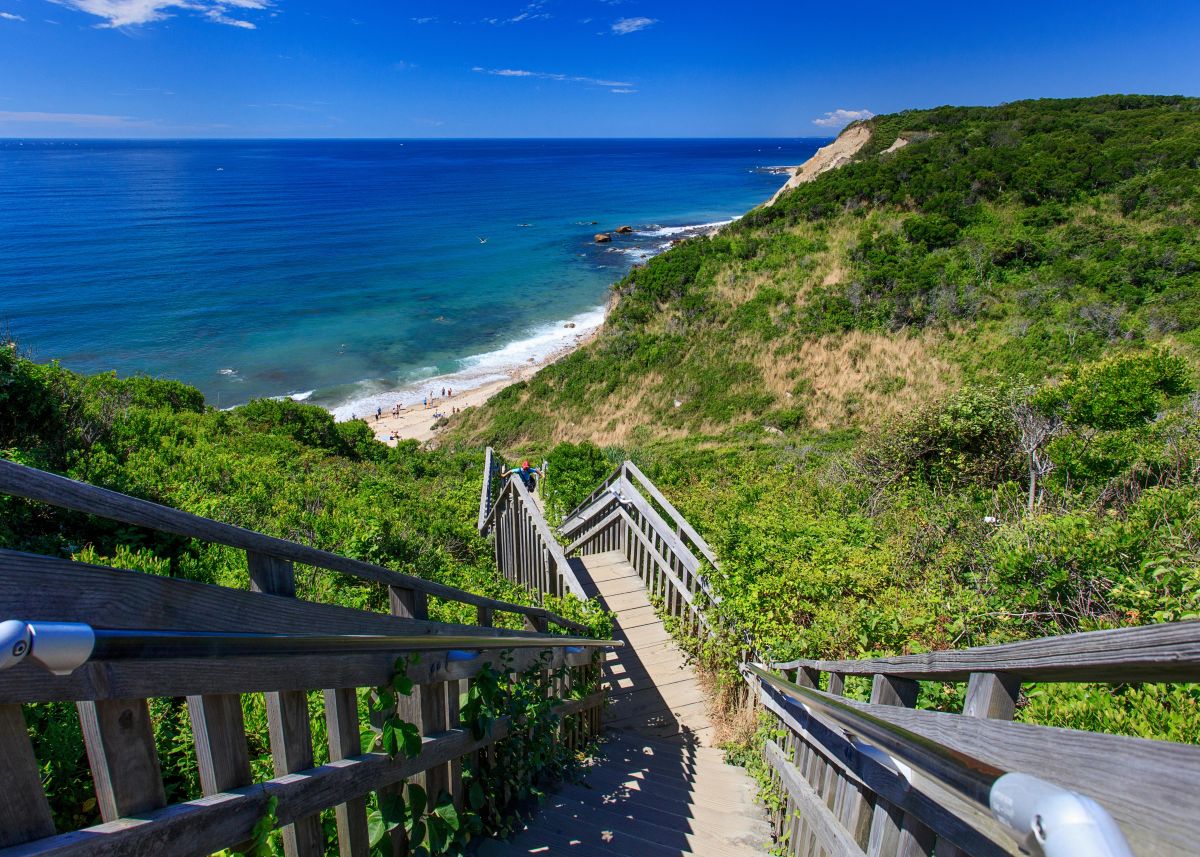
Block Island is home to many natural wonders and historic landmarks like the Mohegan Bluffs and Block Island Southeast Lighthouse. The Mohegan Bluffs rise above sea level about 200 feet. Block Island Southeast Lighthouse is located on the bluffs and has been moved several times due to bluff erosion. 141 steps down the bluffs allow access to a secluded beach below.

Other noteworthy points of interest on Block Island include Block Island Historical Island Museum, the 1661 Animal Farm, which houses a zebra/donkey hybrid, and the Block Island National Wildlife Refuge.


Set Up Camp in Charlestown

Charlestown, located in the southwest portion of the state, is one of Rhode Islandโ€™s best-kept secrets with its miles of secluded beaches. Visitors can enjoy hours on the shoreline, explore nearby attractions, and hike around nature centers. Plus, with RV parks and campgrounds like  Charlestown Breachway and Burlingame State Park in town and a few more just a few minutes away, RVers will have even more time to take in the beauty and charm of Charlestown.

Charlestown contains several beaches that are mostly untouched, with only some development. Some beaches include Blue Shutters Town Beach, Charlestown Town Beach, East Beach State Beach, and Charlestown Breachway State Beach.

If you get a craving for some seafood after spending time on the beach, go to 401 Oyster Company for some freshly shucked oysters and tour its oyster farm. The 1.5-hour tour includes a boat ride across the pond to view several stages of oyster growth and learn about the business of oyster farming.

For a change in scenery, stop by the Ninigret National Wildlife Refuge. The refuge contains diverse upland and wetland habitats, including grasslands, shrublands, wooded swamps, and freshwater ponds. Visitors can enjoy outdoor activities like fishing, kayaking, hunting, wildlife viewing, and photography.

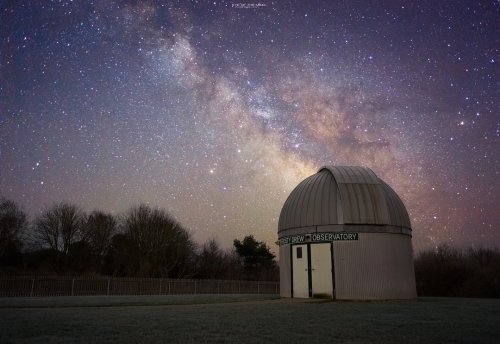
At night, folks can head on over to the Frosty Drew Nature Center and Observatory for some stargazing. The observatory is located in Ninigret Park, which hosts several annual events. The Seafood Festival is the most popular. Named one of the Top 100 Events in America by the American Tour Bus Association, the Seafood Festival happens every August and includes booth after booth of the finest seafood and lobster from the east coast.

Travel and RV Awhile near Westerly

Located on the southwestern shores of Rhode Island, the small coastal town of Westerly offers a slew of nearby popular attractions that range from miles of beaches to miles of hiking trails and nationally recognized historic places to kiddie rides and amusement parks. There are no RV parks or campgrounds located in Westerly, but a few are just outside of town in Bradford and Charlestown, Rhode Island.

Two of the most popular beaches in the state are Misquamicut State Beach and Atlantic Beach Park. Although a mere half-mile long, Misquamicut State Beach is packed to the gills in the summer. Beachgoers sunbathe, build sandcastles, and boogie board, among other activities. Atlantic Beach Park packs beach fun with amusement park thrill rides. The small amusement park has been operating since 1921 and includes rides like a carousel and a dragon roller coaster. Visitors can access the beach directly from the park. Watch Hill Beach has its own carousel as well, the Flying Horse Carousel. It is one of the oldest operating carousels in the nation, starting up in 1883. 

Another way to get some Vitamin D is to go on a hike. The top locations for this activity are Napatree Point Conservation Area and Dr. John Champlin Glacier Park. The conservation area is situated on a slender 1.5-mile peninsula that touches the Block Island Sound. The seashore trail offers picturesque views of Little Narragansett Bay, the open waters of the sound, and Fishers Island. Hikers may want to bring their binoculars for some wildlife and bird watching.

For a more varied topography, consider taking the family to Dr. John Champlin Glacier Park. Formed during the Ice Age, the 134-acre park features examples of kettle and kame topography, carved canyons, ridges, and boulders. Information boards explain each natural phenomenon as you travel down the easy trails.

After sampling some of Westerlyโ€™s finest entrees and brews, take a trip back in time at some of the most historic landmarks near the town. Westerly Public Library, which opened in 1894 as a tribute to Civil War soldiers, houses two art galleries besides its massive literature and resource center. Westerly Armory, built-in 1901, currently displays a variety of both military and community artifacts. Another museum, the Babcock-Smith House Museum, is a historic house from the 1700s. Among its many highlights, both Benjamin Franklin and General George Washington once visited the home.

Two additional places RV families may enjoy are the Watch Hill Lighthouse and Living Shark Museum. The Watch Hill Lighthouse was constructed in 1855 after the original lighthouse, built in 1807, succumbed to erosion. The square tower of Westerly granite stands at 45 feet. The accompanying museum has a collection of artifacts, including lighthouse keepersโ€™ documents, photographs of area ships and storms, and the lighthouseโ€™s original Fresnel lens. While the lighthouse guides over water, the Living Sharks Museum dives below the surface with its array of exhibits on all things Jaws: shark film memorabilia, shark fossils, and stories of encounters between sharks and humans.

Small But Mighty Cool State

Rhode Island has much to offer RVers, both young and young-at-heart. Whether you decide to explore historical landmarks, get back to nature with sand and surf, or both, RVers can find an itinerary to match their traveling mode. For more information on things to do, statewide events, and camping options, go to visitrhodeisland.com. Plus, donโ€™t forget to pack the best roadside assistance Coach-Net to help get you where you need to go safely.


About The Author: Natalie Henley

Natalie Henley and her husband, Levi, have been full-time RVers for over 5 years.  They have also been Coach-Net customers for the same amount of time.  They travel and workcamp around the U.S. in their 26-foot Itasca Sunstar motorhome with their two cats.  They write for multiple RV-related publications and recently co-wrote โ€œSeasonal Workamping for a Living: How We Did It.โ€ You can follow their adventures on the road at henleyshappytrails.com.

RV Protect

Nick O. ~ “If I could give this team 6 stars, I would. Absolutely incredible service, in the middle of the night, in a very remote region. These guys were unbelievable every step of the way, not only ensuring we got the vehicle out, but that we found a place to stay for the evening.”